Methodology
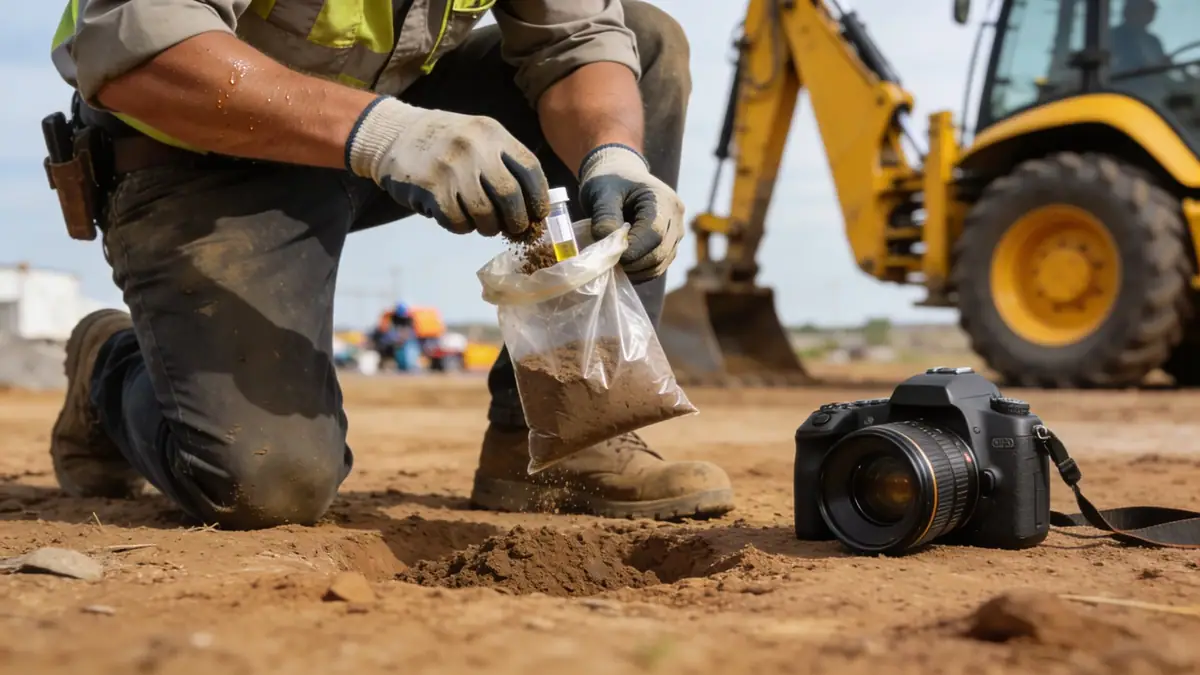
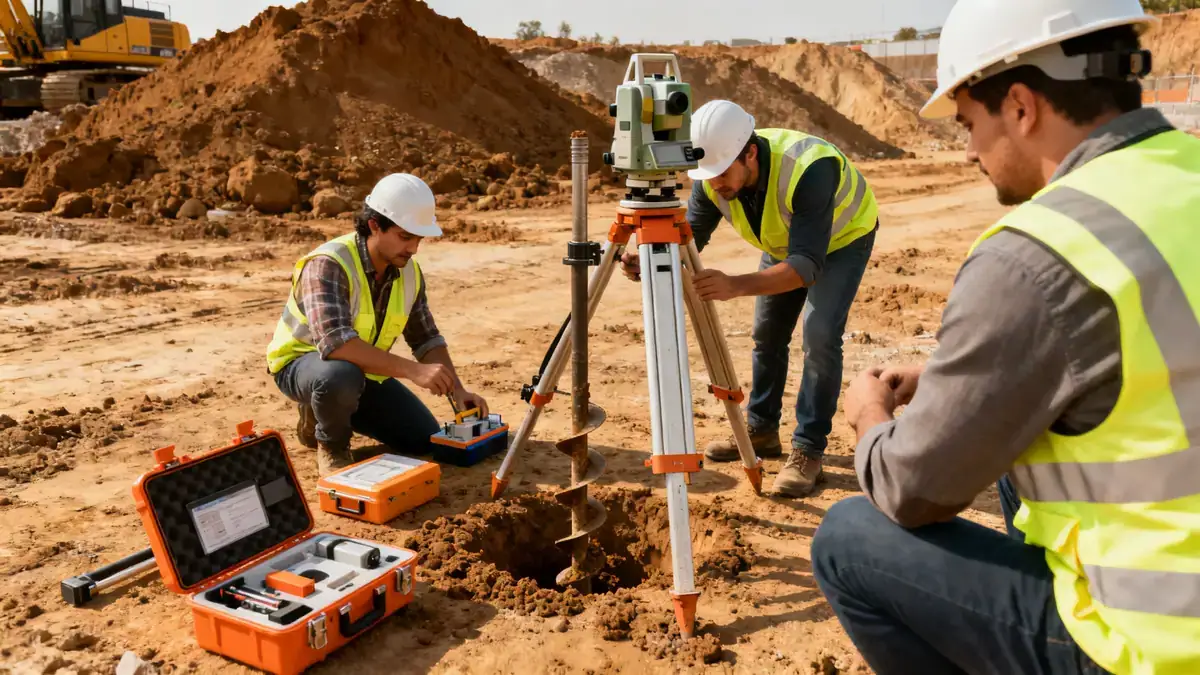
Our geotechnical engineering methodology in Atlanta follows a phased approach: reconnaissance, subsurface exploration, laboratory testing, and engineering analysis. We begin with a review of existing geological maps and historical data to identify potential hazards such as expansive clays or shallow bedrock. Field exploration employs spt boring at intervals of 1.0 to 1.5 meters per ASTM D1586, with depths typically ranging from 8 to 15 meters for residential structures and up to 30 meters for commercial projects. Soil samples are classified using the Unified Soil Classification System (USCS) and tested for index properties, strength, and compressibility. Groundwater monitoring wells are installed to measure seasonal fluctuations. Our analyses follow IBC 2021 seismic provisions and ASCE 7-22, ensuring designs account for Atlanta's site class and spectral accelerations.
Reference Technical Parameters
| Parameter | Reference Value |
|---|---|
| Predominant soil type | Residual silty sands and clayey sands (SM, SC), with weathered granite and gneiss |
| Maximum seismic acceleration (PGA) | 0.10g to 0.15g (IBC 2021, Site Class C) |
| Typical groundwater level | 3 to 8 meters below ground surface, seasonally variable |
| Bedrock depth | 5 to 20 meters, with weathered rock zone extending 2–5 meters |
| Typical N60 range | 10 to 30 blows per 0.3 m in residual soils; >50 in weathered rock |
Local Considerations — Atlanta
Atlanta's geology is dominated by the Piedmont Plateau, characterized by deep residual soils derived from crystalline metamorphic rocks. These soils often exhibit high plasticity and shrink-swell potential, requiring careful evaluation for expansive clay hazards. Groundwater levels fluctuate significantly with seasonal rainfall, impacting excavation dewatering and foundation drainage design. Seismic hazard is moderate, with peak ground accelerations of 0.10–0.15g per IBC 2021, necessitating site-specific response spectra for critical structures. Contrasts exist between downtown areas (deeper fill and alluvial deposits) and suburban zones (shallow bedrock). Common challenges include differential settlement on variable soil profiles and slope stability in hilly terrain. Our soil mechanics laboratory provides tailored testing to address these local conditions, including Atterberg limits, consolidation, and direct shear tests.
Request a Quote
Our team reviews your project and issues an initial report at no cost.
Or write us directly at [email protected]
Services in Atlanta
Locations covered in Atlanta
Applicable Standards
- ASTM D1586
- IBC 2021
- ASCE 7-22
- ASTM D2487
Frequently Asked Questions
What are the typical soil conditions encountered in Atlanta?
Atlanta's soils are predominantly residual, derived from weathered granite and gneiss, consisting of silty sands (SM) and clayey sands (SC). These soils often contain variable amounts of mica and can exhibit high plasticity. Shallow bedrock is common in northern suburbs, while deeper alluvial deposits occur along creek valleys.
Does Atlanta have specific seismic design requirements?
Yes, Atlanta is in Seismic Design Category B per IBC 2021, with mapped spectral accelerations (SS=0.25g, S1=0.08g). Site-specific response spectra may be required for risk category III and IV structures. Our analyses incorporate ASCE 7-22 provisions to ensure compliance with local building codes.
Are geotechnical investigations mandatory for construction in Atlanta?
While not always legally required for all projects, most jurisdictions in the Atlanta area mandate geotechnical reports for commercial buildings and multi-family residential structures. Even for single-family homes, a geotechnical evaluation is strongly recommended due to variable soil conditions and expansive clay risks.