
Methodology
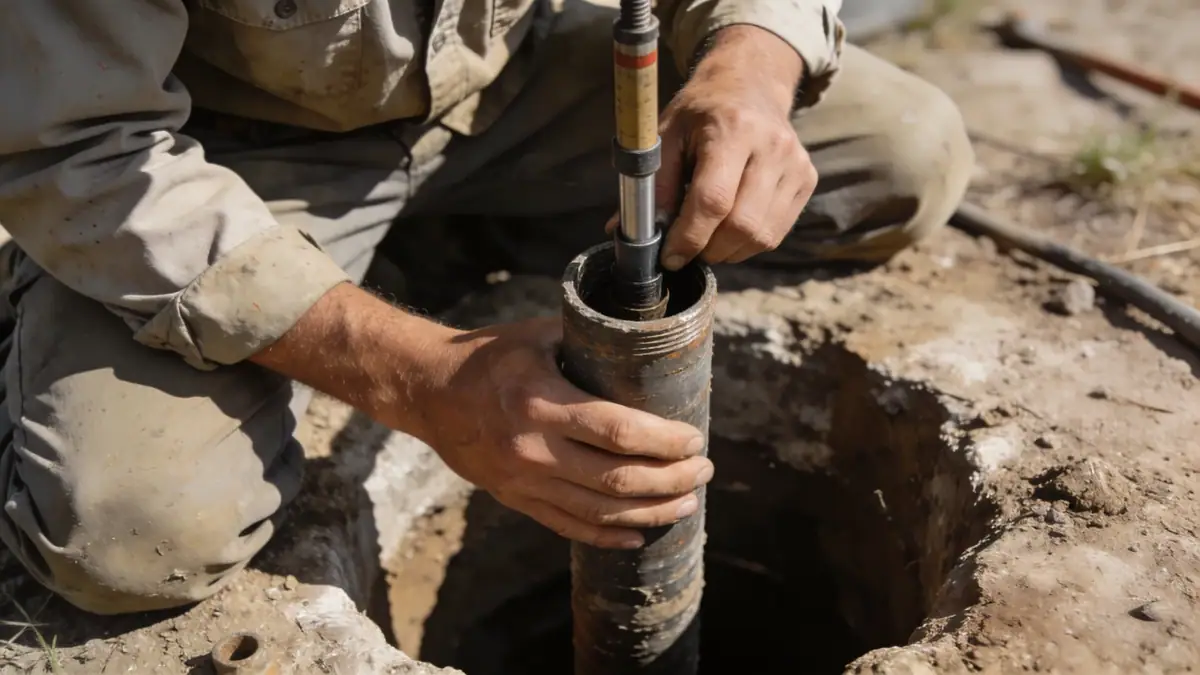
Our methodology in Knoxville follows a phased approach tailored to the local geology. We begin with a desk study of existing soil maps and seismic hazard data, followed by a field reconnaissance to identify sensitive areas. Subsurface exploration employs standard penetration testing (SPT) per ASTM D1586 at intervals of 1.5 m to a depth of 15–20 m for typical structures, with deeper boring for heavy loads. Soil samples are analyzed in our soil mechanics laboratory for classification, strength, and consolidation parameters. We integrate these results with site-specific seismic hazard analysis to characterize liquefaction potential and dynamic soil properties.
Reference Technical Parameters
| Parameter | Reference Value |
|---|---|
| Predominant soil type | Clayey silt and residual siltstone (Typical USCS: ML, CL) |
| Maximum seismic acceleration (PGA) | 0.2–0.3 g (IBC 2021, Site Class C–D) |
| Typical groundwater level | 2–5 m below ground surface (seasonal variation) |
| Bedrock depth | 5–15 m (Weathered shale/siltstone) |
| Typical N60 range | 10–30 blows/300 mm (variable with depth) |
Local Considerations — Knoxville
Knoxville sits within the Valley and Ridge province, characterized by folded sedimentary rock and residual soils. The Tennessee River valley influences groundwater levels, often requiring dewatering for deep excavations. The region's seismic hazard, while moderate, demands careful evaluation of soil amplification and liquefaction for critical structures like hospitals and schools. Our team has extensive experience with the variable soil conditions across Knoxville—from the dense clay of West Knoxville to the shallow bedrock near the Great Smoky Mountains. For complex projects, we coordinate with our geotechnical engineering en Atlanta office to leverage regional expertise. Common challenges include expansive clay behavior and slope instability along the river bluffs, which we address through targeted slope stability analyses and recommendations.
Request a Quote
Our team reviews your project and issues an initial report at no cost.
Or write us directly at [email protected]
Services in Knoxville
Applicable Standards
- ASTM D1586 (Standard Penetration Test)
- IBC 2021 (International Building Code)
- ASCE 7-22 (Minimum Design Loads and Associated Criteria for Buildings and Other Structures)
- Tennessee State Building Code (TSBC) Chapter 18
- ASTM D2487 (Classification of Soils for Engineering Purposes)
Frequently Asked Questions
What are the typical soil conditions in Knoxville for foundation design?
Knoxville's soils are primarily residual, derived from weathered shale, siltstone, and limestone. Common types include clayey silt (ML) and low-plasticity clay (CL). Groundwater is often shallow, within 2–5 m, and bedrock depth varies from 5 to 15 m. These conditions require careful evaluation of bearing capacity and settlement.
Is a geotechnical study mandatory for construction in Knoxville?
Yes, the Tennessee State Building Code requires a geotechnical investigation for most structures, especially those with foundations on expansive soils or in seismic zones. For commercial buildings and multi-family residential projects, a full subsurface exploration per ASTM standards is typically required to obtain a building permit.
How does seismic activity in Knoxville affect foundation design?
Knoxville is in a moderate seismic zone with a peak ground acceleration of 0.2–0.3 g. Site-specific analysis is needed to evaluate soil amplification and liquefaction potential. Our team designs foundations to ASCE 7 requirements, often using deep foundations or ground improvement in areas with loose, saturated soils.