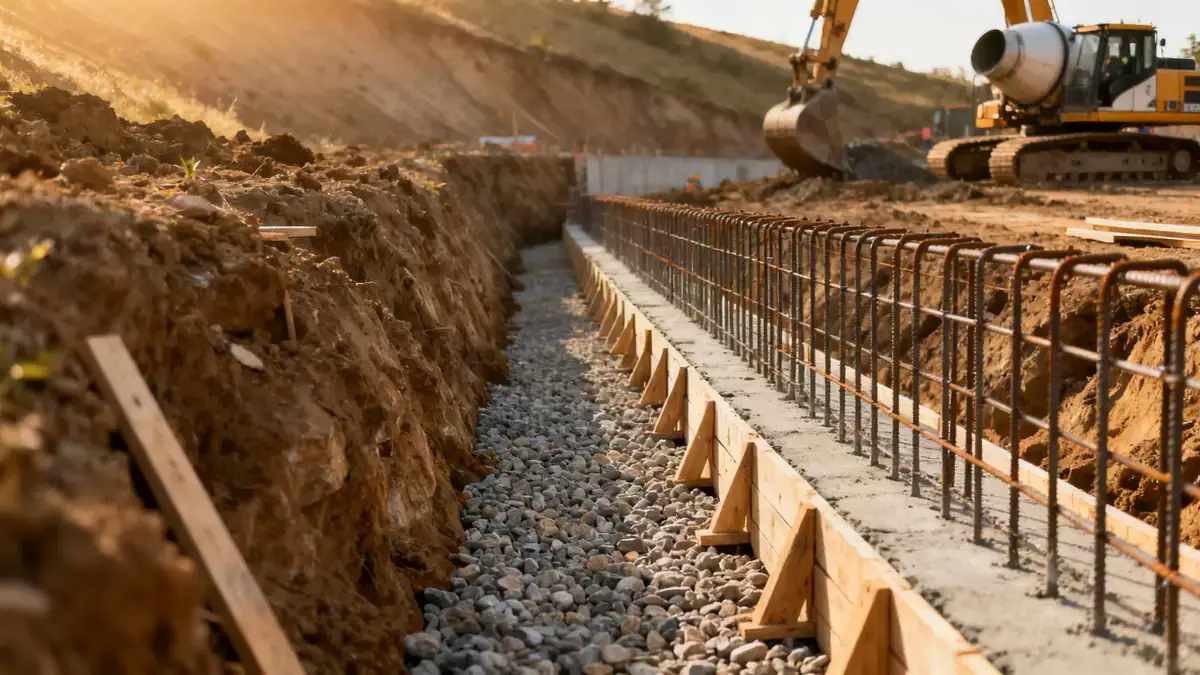
Methodology
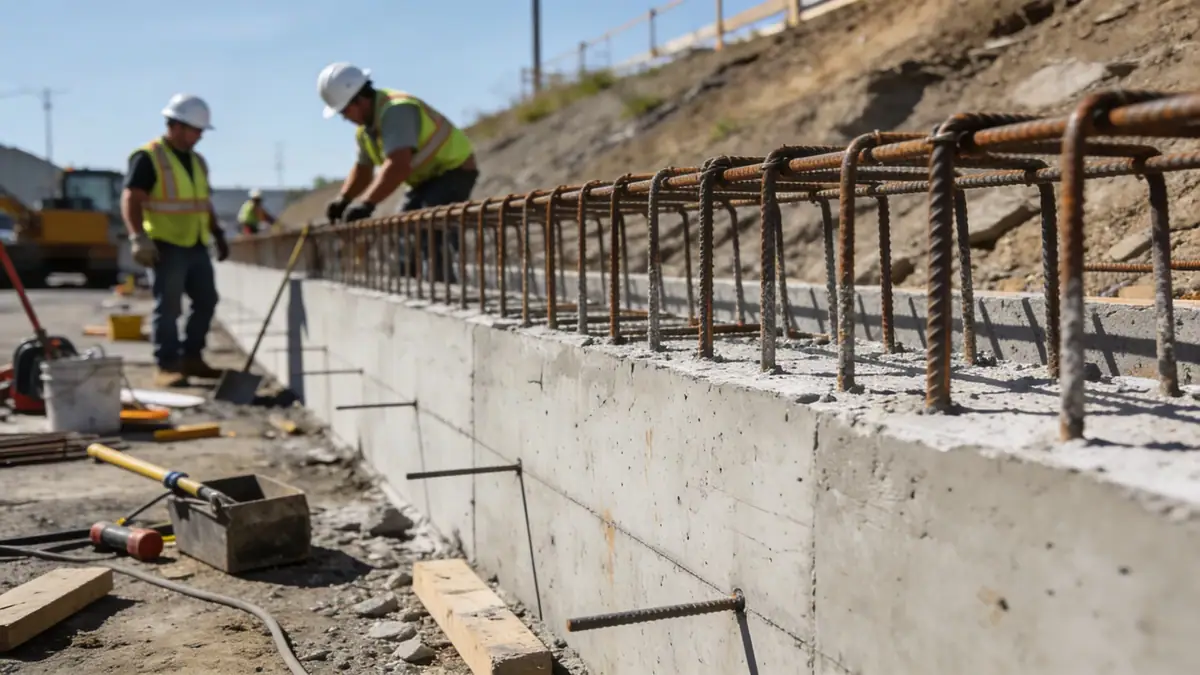
Our retaining wall design methodology follows a systematic approach beginning with subsurface investigation using Standard Penetration Testing (SPT) per ASTM D1586 to characterize soil stratigraphy and strength parameters. We conduct laboratory tests including triaxial compression and direct shear to determine effective friction angles and cohesion values. Using limit equilibrium and finite element methods, we calculate active and passive earth pressures, factor of safety against sliding and overturning (minimum 1.5 per IBC), and bearing capacity. For walls exceeding 20 ft in height, we perform seismic pseudo-static analysis per ASCE 7-16. Drainage design is integrated to prevent hydrostatic pressure buildup. Our team also evaluates global stability for slopes adjacent to retaining structures. This rigorous process ensures that each design is optimized for site-specific conditions across all regions we serve, from the seismic zones of California to the frost-prone areas of the Midwest. Complementary services such as SPT Boring and Slope Stability are often integrated to provide a complete geotechnical solution.
Reference Technical Parameters
| Parameter | Reference Value |
|---|---|
| Maximum Wall Height | Up to 30 ft (9.1 m) |
| Factor of Safety (Sliding) | ≥ 1.5 (static), ≥ 1.1 (seismic) |
| Factor of Safety (Overturning) | ≥ 2.0 (static), ≥ 1.5 (seismic) |
| Backfill Compaction | 95% of maximum dry density (ASTM D698) |
| Allowable Bearing Pressure | 3,000–6,000 psf (144–287 kPa) |
Local Considerations — USA
Retaining wall design requirements vary significantly across the United States due to differences in seismicity, soil type, and climate. In regions with expansive clays such as Dallas and San Antonio, special attention is given to moisture control and drainage to avoid lateral pressure increases. In seismic zones like Los Angeles and San Francisco, designs incorporate dynamic earth pressures and liquefaction potential per ASCE 7. Frost depth considerations are critical in northern cities such as Anchorage and Minneapolis, where walls must extend below the frost line to prevent heave. Geotechnical Engineering LLC adapts each design to local conditions, leveraging our experience in over 50 metropolitan areas. For example, in Akron, our designs address glacial till and sloping bedrock; in Albuquerque, we consider collapsible soils; and in Allentown, we account for variable residual soils. Learn more about our regional expertise on our Akron page.
Request a Quote
Our team reviews your project and issues an initial report at no cost.
Or write us directly at [email protected]
Applicable Standards
- ASCE 7-16 (Minimum Design Loads and Associated Criteria for Buildings and Other Structures)
- IBC 2021 (International Building Code)
- AASHTO LRFD Bridge Design Specifications (for MSE walls)
- ASTM D1586 (Standard Penetration Test)
Frequently Asked Questions
What geotechnical parameters are essential for retaining wall design?
Key parameters include soil unit weight, effective friction angle (φ'), cohesion (c'), and at-rest or active earth pressure coefficients (K0, Ka). These are determined from field and laboratory tests such as SPT, triaxial shear, and direct shear. For cohesive soils, undrained shear strength (Su) is also critical for short-term stability.
How does seismic loading affect retaining wall design?
Seismic loading increases lateral earth pressures due to ground acceleration. Per ASCE 7-16, a pseudo-static seismic coefficient is applied, and the factor of safety against sliding and overturning must be reduced to 1.1 and 1.5 respectively. In high-seismic zones, liquefaction potential and lateral spreading are also evaluated.
What is the typical timeline for a retaining wall design project?
The timeline depends on site complexity and wall height. For a standard wall up to 15 ft, design typically takes 2–4 weeks, including subsurface investigation, laboratory testing, and analysis. Larger or seismically complex walls may require 6–8 weeks. Expedited schedules are possible for urgent projects.
How much does retaining wall design cost in the USA?
Costs vary based on wall height, soil conditions, and site accessibility. For a typical residential or commercial retaining wall design, fees range from $1,050 to $4,200. This includes subsurface investigation, laboratory testing, and engineering analysis. Exact pricing requires a site-specific proposal. Contact us for a detailed quote.