Methodology
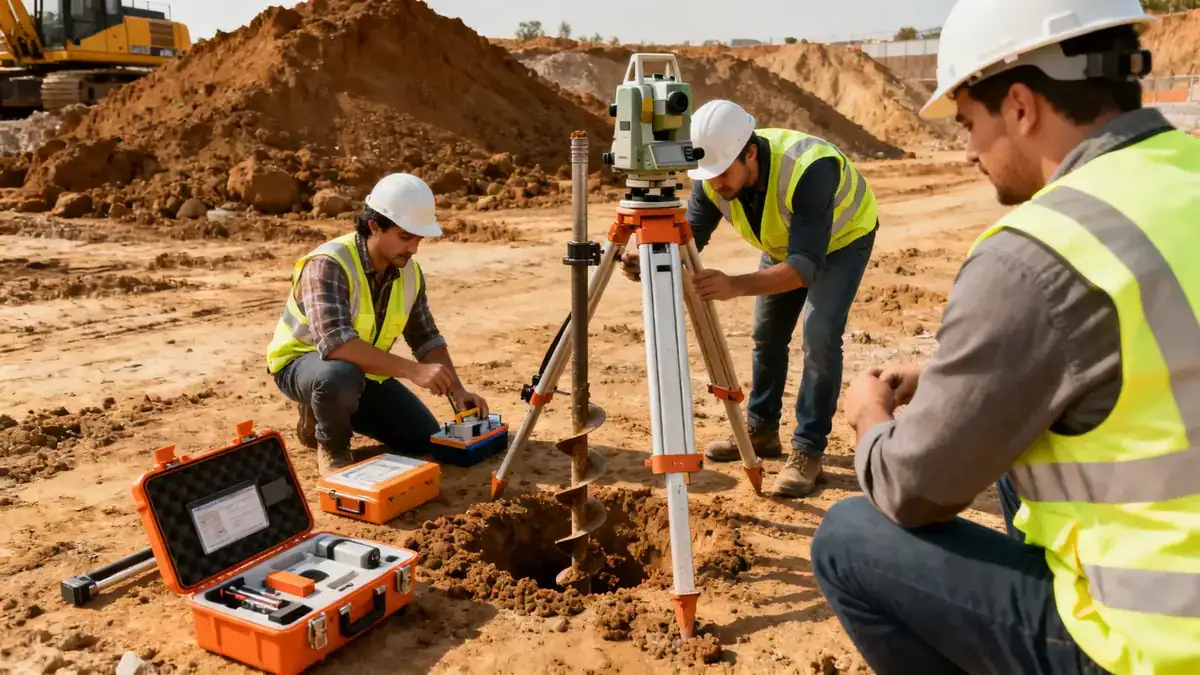
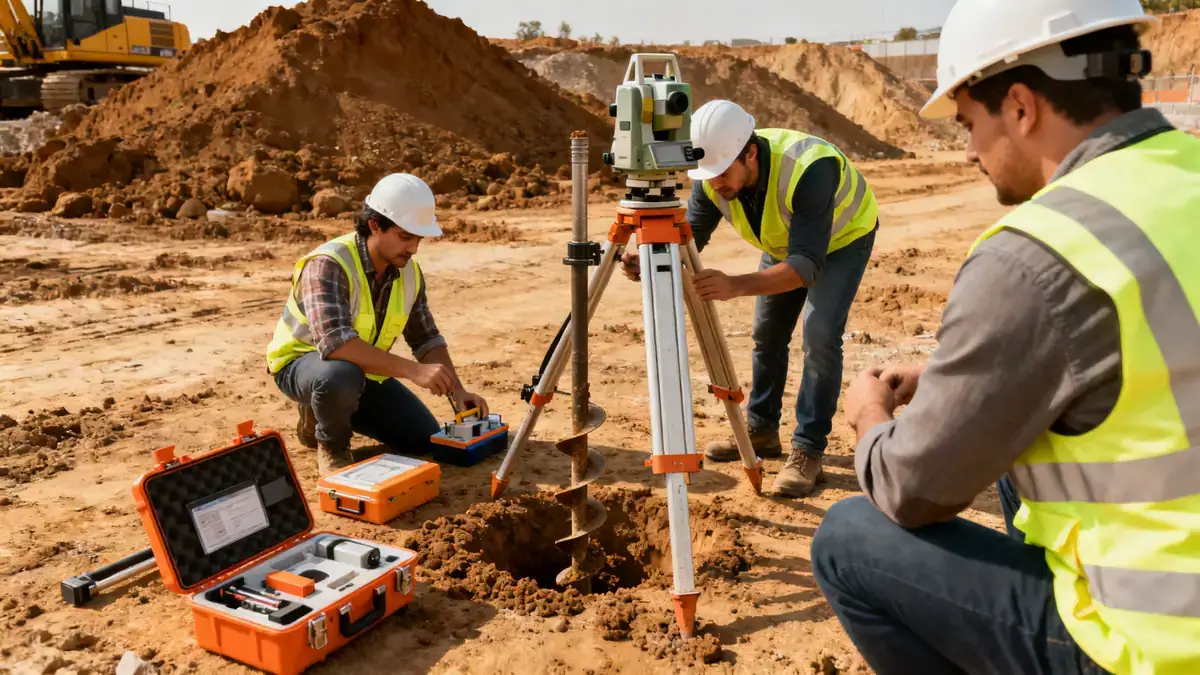
Our methodology for geotechnical investigations in Columbus Georgia integrates advanced field techniques and laboratory analyses. We employ spt boring to obtain disturbed and undisturbed samples, following ASTM D1586 standards for standard penetration testing. This approach allows us to characterize soil strata, measure N-values, and assess bearing capacity. Combined with in-situ testing and laboratory classification, our procedures ensure robust data for foundation design, retaining wall stability, and slope analysis, tailored to the local geology.
Reference Technical Parameters
| Parameter | Reference Value |
|---|---|
| Predominant soil type | Residual sandy silt and clay (Piedmont) |
| Maximum seismic acceleration (PGA) | 0.2g (ASCE 7-16) |
| Typical groundwater level | 3–8 m below surface in valley areas |
| Bedrock depth | Variable, 5–30 m depending on location |
| Typical N60 range (SPT) | 10–30 blows/ft in residual soils |
Local Considerations — Columbus Georgia
Columbus lies within the Piedmont physiographic province, underlain by crystalline metamorphic and igneous rocks. Residual soils—typically sandy silts and clays—formed from in-place weathering, can extend to depths of 10–20 m, with bedrock depth varying significantly. Shallow groundwater may be encountered in valley fills, requiring dewatering considerations. Seismic hazard is moderate, with peak ground acceleration (PGA) up to 0.2g per ASCE 7-16. Contrasts exist between downtown areas (more fill and alluvium) and suburban developments (deeper residual profiles). Our soil mechanics laboratory supports site-specific characterization for these conditions.
Request a Quote
Our team reviews your project and issues an initial report at no cost.
Or write us directly at [email protected]
Services in Columbus Georgia
Applicable Standards
- ASTM D1586 (Standard Penetration Test)
- ASCE 7-16 (Minimum Design Loads for Buildings)
- IBC 2021 (International Building Code)
Frequently Asked Questions
What are the typical soil conditions in Columbus Georgia?
Columbus Georgia primarily features residual soils derived from the Piedmont's crystalline rocks. These include sandy silts and clays with variable depths of weathering, often underlain by bedrock at depths of 5 to 30 meters. Alluvial deposits may be present near the Chattahoochee River.
Does Columbus Georgia have specific seismic design requirements?
Yes, Columbus falls within the Eastern Tennessee Seismic Zone, which requires moderate seismic design per ASCE 7. The mapped spectral acceleration (Ss) is about 0.2g for short periods, necessitating site-specific studies for critical structures.
Are geotechnical studies mandatory for construction in Columbus Georgia?
While not always legally mandatory for all projects, geotechnical studies are strongly recommended by local building codes (IBC 2021) for commercial and multi-family structures. They are essential to mitigate risks from variable soil conditions and seismic hazards.