Methodology
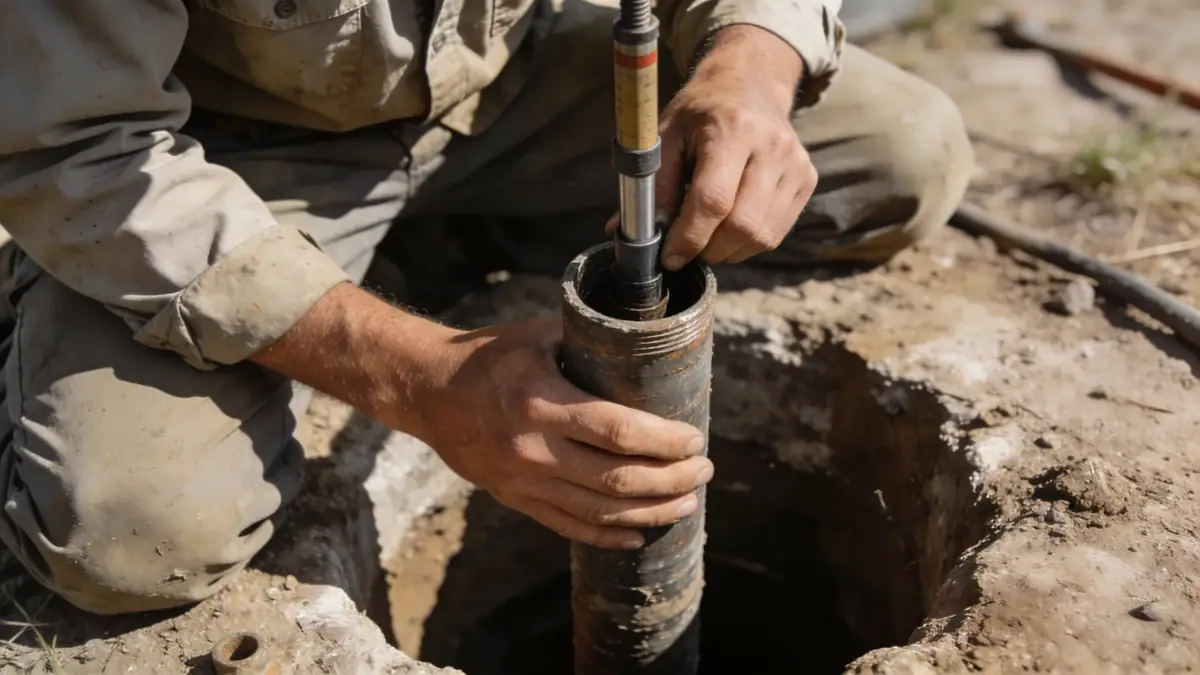
Our approach to geotechnical engineering in Birmingham Alabama begins with a thorough site reconnaissance and subsurface investigation program. We utilize spt boring to obtain disturbed and undisturbed samples at regular intervals, typically 1.5 meters, per ASTM D1586. Field testing includes standard penetration tests (SPT) with N-values recorded, and groundwater monitoring. Laboratory testing classifies soils per the Unified Soil Classification System (USCS) and evaluates strength parameters through direct shear and triaxial tests. This data informs bearing capacity analyses, settlement estimates, and seismic site classification per ASCE 7-16, ensuring robust foundation recommendations.
Reference Technical Parameters
| Parameter | Reference Value |
|---|---|
| Predominant soil type | Sandy silt (SM-ML) with clay lenses |
| Maximum seismic acceleration (PGA) | 0.15g (ASCE 7-16, Site Class C) |
| Typical groundwater level | 3–15 m below ground surface |
| Bedrock depth | 10–30 m (Piedmont saprolite) |
| Typical N60 range | 10–30 blows/ft (residual soil) |
Local Considerations — Birmingham Alabama
Birmingham's Piedmont geology presents variable soil conditions: shallow bedrock in the Ridge and Valley region versus deeper saprolite in the Coastal Plain transition. Our team addresses these contrasts by tailoring investigation depths and testing methods. For projects near the Cahaba River or Red Mountain, we assess karst potential and slope stability. Local experience with brownfield redevelopment in industrial zones further informs our risk mitigation strategies. Interlinking our expertise with soil mechanics laboratory services, we provide integrated solutions for Birmingham's diverse geotechnical challenges. For broader regional support, our geotechnical engineering en Atlanta practice offers additional resources.
Request a Quote
Our team reviews your project and issues an initial report at no cost.
Or write us directly at [email protected]
Services in Birmingham Alabama
Applicable Standards
- ASCE 7-16 (Minimum Design Loads and Associated Criteria for Buildings and Other Structures)
- ASTM D1586 (Standard Test Method for Standard Penetration Test (SPT) and Split-Barrel Sampling of Soils)
- Alabama Building Commission (2018 International Building Code with Alabama Amendments)
- ASTM D2487 (Standard Practice for Classification of Soils for Engineering Purposes (Unified Soil Classification System))
- ASTM D3080 (Standard Test Method for Direct Shear Test of Soils Under Consolidated Drained Conditions)
Frequently Asked Questions
What are the predominant soil types in Birmingham, Alabama?
Birmingham's soils are primarily residual from the Piedmont metamorphic rocks, consisting of sandy silts (SM), silty sands (SM), and clayey sands (SC). These soils often exhibit variability with depth, requiring careful subsurface investigation per ASTM D1586 to characterize their engineering properties.
Does Birmingham have seismic design requirements?
Yes, Birmingham is in Seismic Design Category B per ASCE 7-16, with a maximum considered earthquake spectral response acceleration (S_s) of 0.15g. Site-specific soil classification is required to determine the appropriate seismic coefficients for foundation and structural design.
Are geotechnical studies mandatory for construction in Birmingham?
While not always legally required for all projects, the Alabama Building Code (based on IBC) recommends geotechnical investigations for most structures. Lenders and insurers often require studies for commercial and multi-family projects to mitigate risk. Our firm provides tailored investigations to meet these needs.