Methodology

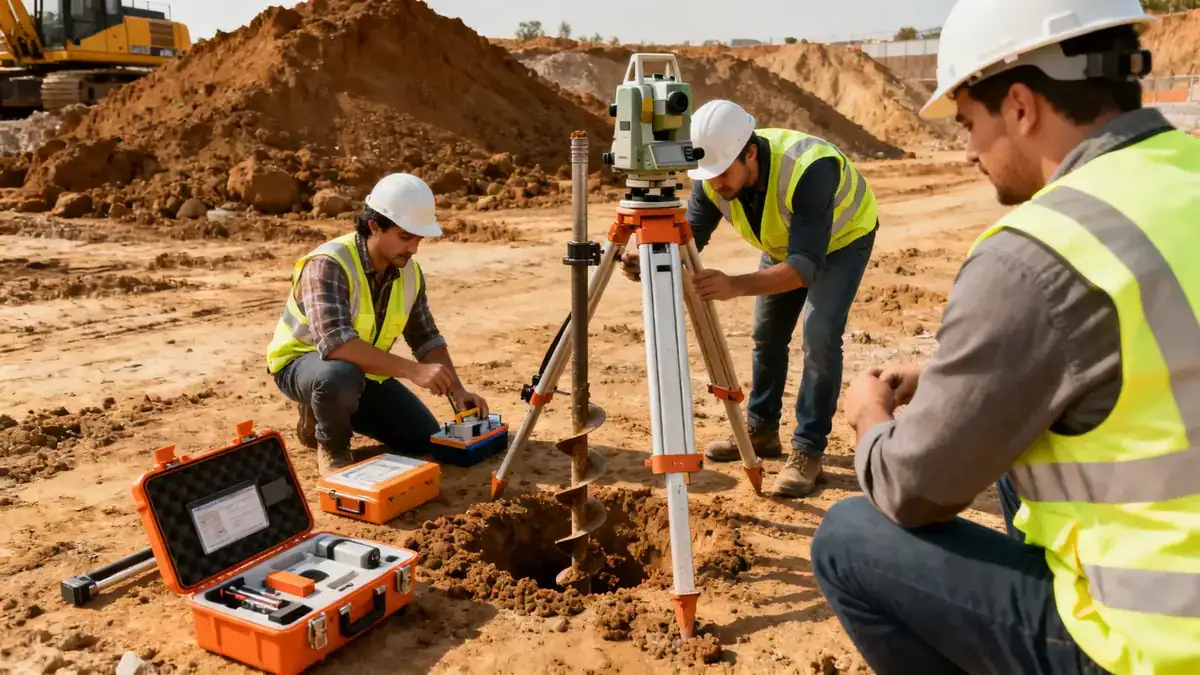
Our methodology for geotechnical engineering in Murfreesboro begins with a comprehensive review of existing geological maps and records. We then conduct field investigations using spt boring to obtain soil samples and measure resistance, following ASTM D1586 procedures. Laboratory testing on retrieved samples includes classification, strength, and consolidation tests. Our approach integrates these data to develop site-specific recommendations for foundation design, earthworks, and groundwater control. We emphasize quality control through continuous monitoring and adherence to established protocols, ensuring reliable results for our clients.
Reference Technical Parameters
| Parameter | Reference Value |
|---|---|
| Predominant soil type | Clay and silty clay over limestone residuum |
| Maximum seismic acceleration (PGA) | 0.15–0.20 g (ASCE 7-16) |
| Typical groundwater level | 5–15 ft below ground surface |
| Bedrock depth | 10–30 ft (limestone) |
| Typical N60 range (SPT) | 4–15 blows/ft (clay); 20–50+ (weathered rock) |
Local Considerations — Murfreesboro
Murfreesboro's geology is dominated by limestone bedrock of the Ordovician period, overlain by residual clay soils formed from weathering. The water table is typically shallow, requiring dewatering considerations for excavations. Seismic hazard is moderate, with peak ground accelerations of 0.15–0.20 g per ASCE 7. Development patterns show contrast between stable upland areas and floodplains along the Stones River, where soft soils and high water tables pose challenges. Typical projects include residential subdivisions and commercial buildings, where our team addresses settlement and expansive clay risks. For regional context, our geotechnical engineering en Atlanta hub provides broader insights into similar Piedmont geology.
Request a Quote
Our team reviews your project and issues an initial report at no cost.
Or write us directly at [email protected]
Services in Murfreesboro
Applicable Standards
- ASTM D1586 – Standard Test Method for Standard Penetration Test (SPT)
- ASCE 7 – Minimum Design Loads and Associated Criteria for Buildings
- IBC – International Building Code (adopted by Tennessee)
- ASTM D2487 – Standard Practice for Classification of Soils
- ASTM D4318 – Standard Test Methods for Liquid Limit, Plastic Limit, and Plasticity Index
Frequently Asked Questions
What soil types are commonly found in Murfreesboro?
Murfreesboro typically features residual clay soils derived from limestone weathering, often with silt and sand fractions. These clays can be expansive, posing challenges for foundations. Deeper layers may include weathered limestone and chert. Proper soil testing is essential for design.
Is seismic design required for projects in Murfreesboro?
Yes, Murfreesboro is in a moderate seismic zone per ASCE 7. The mapped spectral accelerations (S_S and S_1) require site-specific response analysis for many structures. Our geotechnical reports provide seismic site classification and design parameters to meet code requirements.
Are geotechnical studies mandatory for construction in Murfreesboro?
While not always legally required for all projects, most local building departments recommend or require geotechnical reports for commercial and multi-family developments. For residential construction, it is strongly advised to address soil variability and expansive clay risks.