Methodology
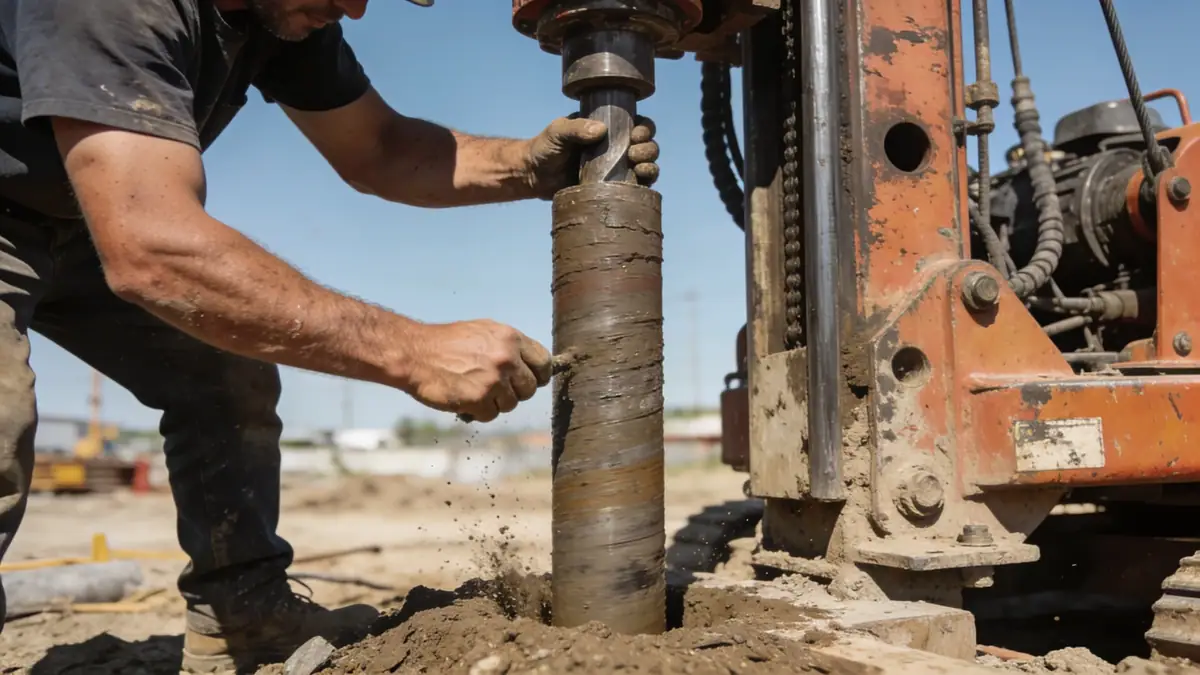
Our methodology integrates standard penetration testing per ASTM D1586 with advanced laboratory analyses in our soil mechanics laboratory to characterize St Paul's complex stratigraphy. We utilize continuous sampling techniques to capture variations in the St. Peter Sandstone and glacial till sequences. Field investigations are complemented by geophysical surveys to map bedrock depth and groundwater regimes. This multi-faceted approach ensures robust data for slope stability assessments and retaining wall designs, aligning with project-specific risk profiles.
Reference Technical Parameters
| Parameter | Reference Value |
|---|---|
| Predominant soil type | Glacial till and alluvial deposits |
| Maximum seismic acceleration (PGA) | 0.15g (ASCE 7-16) |
| Typical groundwater level | 3–8 m below surface |
| Bedrock depth | 10–30 m (St. Peter Sandstone) |
| Typical N60 range | 10–40 blows/0.3 m |
Local Considerations — St Paul
St Paul's geology is dominated by glacial till overlying the St. Peter Sandstone, with alluvial deposits along the Mississippi River. Groundwater levels fluctuate seasonally, requiring careful dewatering plans. Seismic site classification per ASCE 7 typically falls into Site Class C or D. The downtown area contrasts with residential zones: deeper bedrock in the bluffs versus shallow fill near the river. Common challenges include collapsible soils and expansive clays. For regional context, our geotechnical engineering en Chicago hub addresses similar glacial geology. We also integrate slope stability analyses for bluff-side developments.
Request a Quote
Our team reviews your project and issues an initial report at no cost.
Or write us directly at [email protected]
Services in St Paul
Applicable Standards
- ASTM D1586
- ASCE 7-16
- IBC 2021
- Minnesota State Building Code
- OSHA 29 CFR 1926 Subpart P
Frequently Asked Questions
What are the typical soil conditions in St Paul?
St Paul's subsurface consists of glacial till, alluvial deposits, and the St. Peter Sandstone formation. Soils range from loose sands to stiff clays, with variable groundwater depths. Bedrock is generally encountered between 10 and 30 meters.
Does St Paul have seismic design requirements?
Yes, the 2021 IBC and ASCE 7-16 require seismic design for most structures. St Paul falls under Seismic Design Category B or C, with a peak ground acceleration of 0.15g. Site-specific response spectra may be needed for critical facilities.
Are geotechnical investigations mandatory for new construction in St Paul?
While not explicitly mandated by city code, the Minnesota State Building Code recommends geotechnical investigations for all structures. Lenders and insurers often require them, and our team provides the necessary documentation for permit approval.