
Methodology
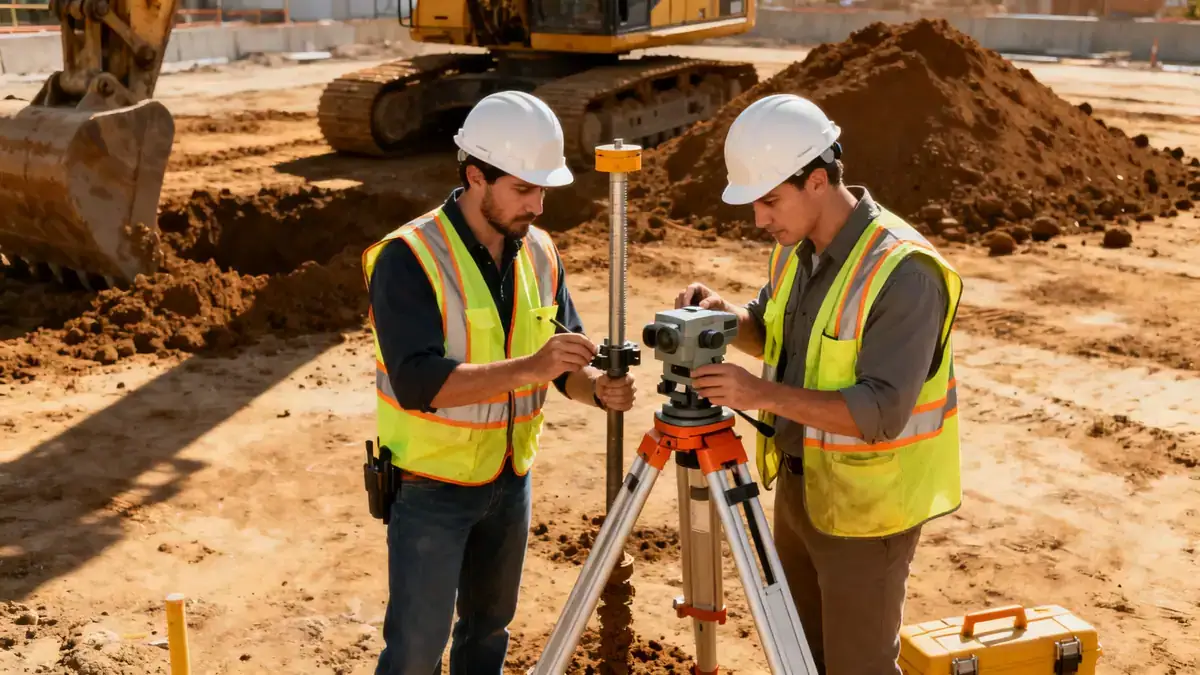
Our approach to geotechnical engineering in Richmond Virginia integrates site-specific investigations with advanced analysis. We conduct spt boring to characterize subsurface stratigraphy and collect undisturbed samples for laboratory testing. Field programs are tailored to each project, with boring depths typically ranging from 8 to 30 meters depending on structural loads. All testing follows ASTM D1586 for standard penetration tests and ASTM D2487 for soil classification, ensuring reliable data for foundation design.
Reference Technical Parameters
| Parameter | Reference Value |
|---|---|
| Predominant soil type | Sandy clay and silty sand (SC, SM) |
| Maximum seismic acceleration (PGA) | 0.15g (ASCE 7-16) |
| Typical groundwater level | 1.5 to 3.0 meters below grade |
| Bedrock depth | Variable, 6 to 15 meters |
| Typical N60 range | 5 to 25 blows per 300 mm |
Local Considerations — Richmond Virginia
Richmond Virginia lies within the Atlantic Coastal Plain, underlain by unconsolidated sediments of Quaternary and Tertiary age. Shallow groundwater and low-bearing-capacity soils require careful foundation design. Seismic hazard is moderate (PGA 0.15g) per ASCE 7-16. Older districts like The Fan may have undocumented fill, while new developments in the West End encounter deeper sandy layers. Our team integrates these local factors into every project, referencing our soil mechanics laboratory for precise characterization.
Request a Quote
Our team reviews your project and issues an initial report at no cost.
Or write us directly at [email protected]
Services in Richmond Virginia
Applicable Standards
- ASTM D1586
- ASCE 7-16
- ASTM D2487
- Virginia Uniform Statewide Building Code (USBC)
Frequently Asked Questions
What soil conditions are typical for Richmond Virginia?
Richmond Virginia predominantly features sandy clays and silty sands with shallow groundwater. These soils can exhibit low bearing capacity and high shrink-swell potential, necessitating thorough geotechnical investigation for foundation design.
Is seismic design required in Richmond Virginia?
Yes. Richmond Virginia is assigned a moderate seismic hazard category with a PGA of 0.15g per ASCE 7-16. Seismic design is mandatory for most structures, and our geotechnical reports provide site-specific spectral accelerations and liquefaction assessments.
Do I need a geotechnical study for a residential project in Richmond Virginia?
While not always mandatory for single-family homes, a geotechnical study is strongly recommended due to variable soil conditions and shallow groundwater. Many local building departments require it for larger residential developments or sites with known fill.