Methodology

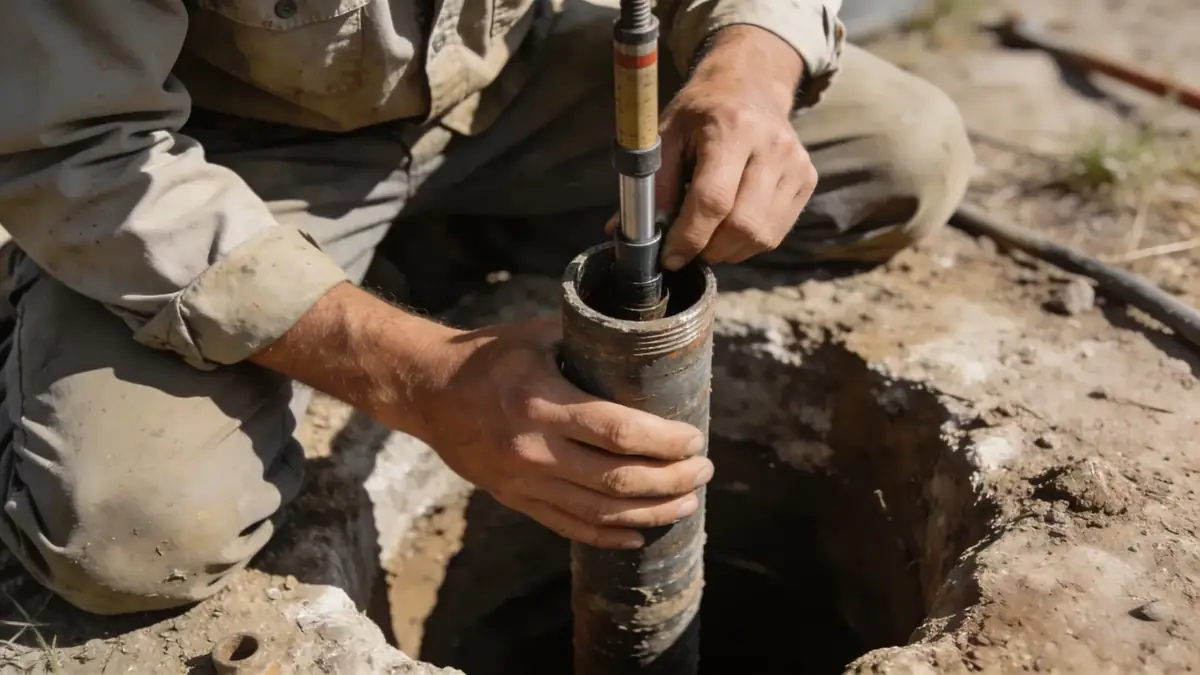
Our methodology for geotechnical engineering in Rancho Cucamonga integrates field exploration and laboratory testing tailored to alluvial and colluvial soils. We perform standard penetration testing (ASTM D1586) to obtain N60 values and soil samples at 1.0–1.5 m intervals, typically advancing borings to 15 m depth. Laboratory work includes grain-size analysis, Atterberg limits, and direct shear testing. For seismic evaluations, we use site response analysis per ASCE 7 to determine design spectral accelerations. This approach ensures robust foundation and earthwork designs. For more on our field methods, see our spt boring page.
Reference Technical Parameters
| Parameter | Reference Value |
|---|---|
| Predominant soil type | Alluvial sands and gravels with silt lenses |
| Maximum seismic acceleration (PGA) | 0.4–0.6 g (Site Class D) |
| Typical groundwater level | 15–25 m below surface |
| Bedrock depth | 30–60 m (weathered granitic rock) |
| Typical N60 range | 10–40 blows/ft (variable) |
Local Considerations — Rancho Cucamonga
Rancho Cucamonga lies on alluvial fans from the San Gabriel Mountains, with soils ranging from loose sands to dense gravels. Groundwater is deep, reducing liquefaction risk, but collapsible soils may occur near alluvial slopes. Seismic hazard is significant due to the Cucamonga Fault; site-specific response spectra are often required. Newer developments in the north (foothills) may encounter granitic bedrock at shallow depths, while southern areas have deeper soils. A common challenge is variable compaction of fill in older subdivisions. Our team coordinates with local agencies to address these conditions. For laboratory testing of these soils, see our soil mechanics laboratory page. Our geotechnical engineering en Los Angeles hub provides broader regional context.
Request a Quote
Our team reviews your project and issues an initial report at no cost.
Or write us directly at [email protected]
Services in Rancho Cucamonga
Applicable Standards
- ASTM D1586 (Standard Penetration Test)
- ASCE 7 (Minimum Design Loads for Buildings)
- California Building Code (CBC) Chapter 18
- CGS Special Publication 117 (Earthquake Design)
Frequently Asked Questions
What soil types are typical for Rancho Cucamonga?
Rancho Cucamonga soils are primarily alluvial sands and gravels deposited by historic streams. Silty layers and cobbles are common near the mountain front. In some areas, older terrace deposits contain dense sands and clays.
Does Rancho Cucamonga have specific seismic design requirements?
Yes. The city lies near the Cucamonga Fault, a thrust fault with moderate activity. The California Building Code requires site-specific seismic hazard analysis for many projects, including determination of Site Class (typically D) and design spectral accelerations per ASCE 7.
Are geotechnical studies mandatory for new construction in Rancho Cucamonga?
Generally, yes. The city requires a geotechnical investigation for most new buildings and additions, especially in Seismic Hazard Zones. Reports must address soil bearing capacity, settlement, and seismic hazards per CBC Chapter 18.