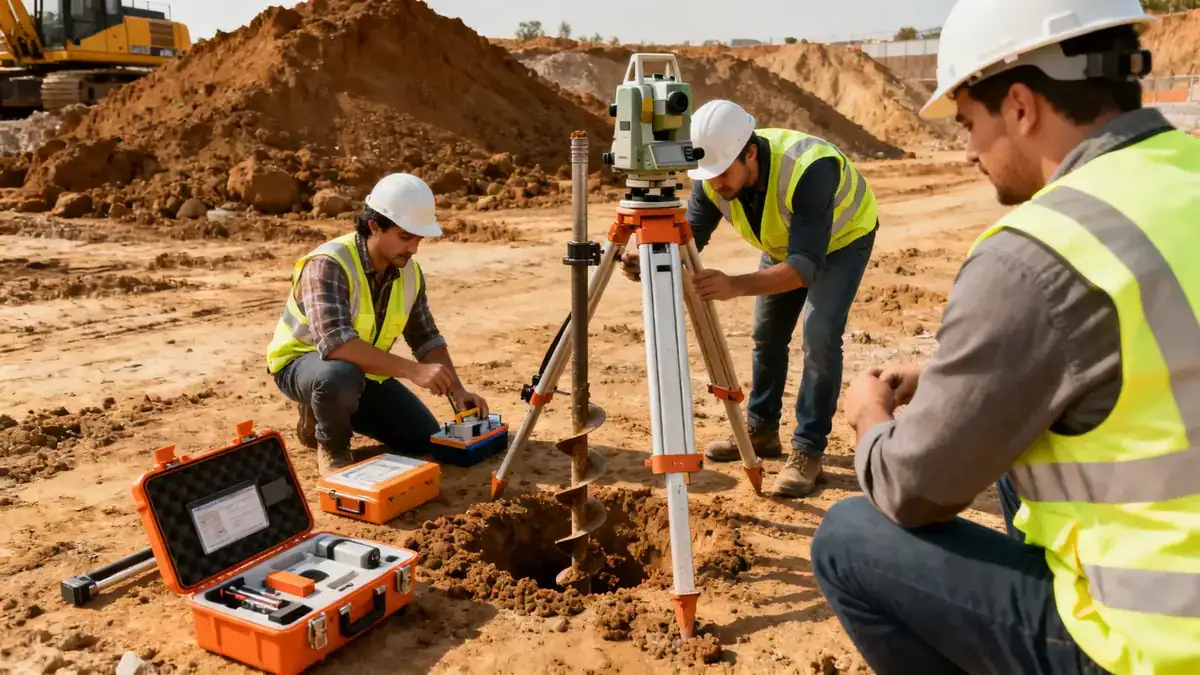
Methodology
Our approach to geotechnical engineering in Pomona begins with a comprehensive review of existing geologic maps and nearby project data. We then conduct field investigations using spt boring to characterize soil strata and measure in-situ strength. Laboratory testing on recovered samples follows ASTM standards, including index properties and consolidation tests. For seismic design, we evaluate site class per ASCE 7 and perform liquefaction analyses using N60 values from SPT data. All work is documented in detailed reports that guide foundation and earthwork design, ensuring compliance with local building codes.
Reference Technical Parameters
| Parameter | Reference Value |
|---|---|
| Predominant soil type | Alluvial sands, silts, and clays with gravel lenses |
| Maximum seismic acceleration (PGA) | 0.4g to 0.6g (ASCE 7 risk-targeted) |
| Typical groundwater level | 15 to 30 feet below ground surface |
| Bedrock depth | Over 100 feet in valley areas; variable in foothills |
| Typical N60 range | 5 to 30 blows per foot (variable by depth and location) |
Local Considerations — Pomona
Pomona lies within the Pomona Valley, underlain by deep alluvial deposits from the San Gabriel Mountains. Soil conditions vary significantly: northern foothills feature coarser sands and gravels with shallow bedrock, while southern areas have finer silts and clays with deeper groundwater. Seismic hazards include strong shaking from nearby faults (San Jose, Cucamonga) and liquefaction potential in saturated sandy layers. Our team has addressed these conditions in numerous projects, from hillside retaining walls to commercial pads. For specialized analysis, we refer clients to our slope stability services. Our work in Pomona is supported by our main office in Los Angeles; see our geotechnical engineering services in Los Angeles for broader capabilities.
Request a Quote
Our team reviews your project and issues an initial report at no cost.
Or write us directly at [email protected]
Services in Pomona
Applicable Standards
- ASTM D1586 (Standard Penetration Test)
- ASCE 7 (Minimum Design Loads for Buildings and Other Structures)
- California Building Code (CBC) Chapter 18
- ASTM D2487 (Unified Soil Classification System)
- ASTM D2435 (One-Dimensional Consolidation)
Frequently Asked Questions
What soil types are commonly found in Pomona?
Pomona soils are predominantly alluvial sands, silts, and clays with variable gravel content. Near the foothills, coarse sands and gravels dominate, while finer materials prevail in the southern valley. These conditions require careful characterization for foundation design.
Does Pomona require seismic geotechnical studies?
Yes, due to high seismic activity from nearby faults, the California Building Code mandates site-specific seismic hazard analyses. Our studies evaluate peak ground acceleration, liquefaction potential, and site class per ASCE 7 to ensure structural safety.
Are geotechnical investigations mandatory for new construction in Pomona?
While not always required for minor additions, most new buildings and subdivisions in Pomona necessitate a geotechnical report per CBC Chapter 18. Lenders and insurers often require it to mitigate risk. Our firm provides compliant investigations for permit approval.