
Methodology
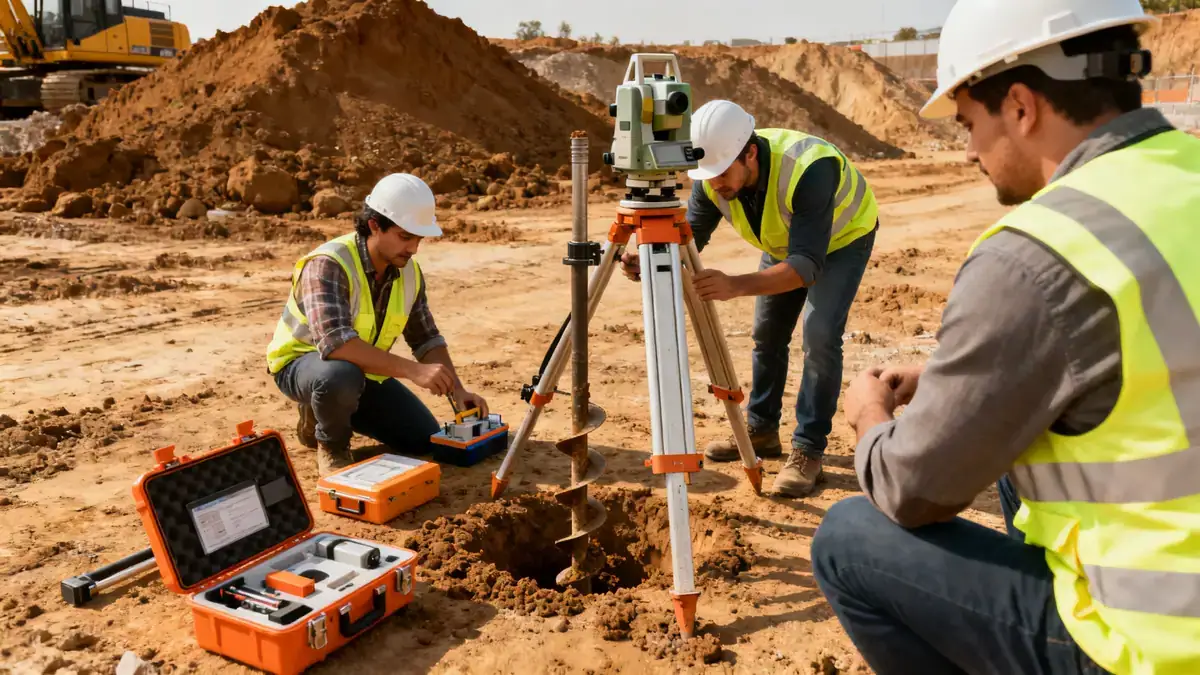
Our methodology for geotechnical engineering in Oakland begins with a comprehensive review of site history, geologic maps, and nearby project records. We then conduct field investigations, including spt boring to sample subsurface conditions and measure standard penetration resistance. Laboratory testing follows, with classification, strength, and consolidation tests performed in our soil mechanics laboratory. Data are interpreted using site-specific correlations and local experience, and we develop design parameters for foundations, retaining walls, and slopes. All work adheres to ASTM standards and local building codes, with seismic considerations integrated per ASCE 7.
Reference Technical Parameters
| Parameter | Reference Value |
|---|---|
| Predominant soil type | Young alluvium / Bay Mud (soft clay, silt) near coast; colluvium / residual soil on hills |
| Maximum seismic acceleration (PGA) | 0.4–0.6 g (Site Class D typical, per ASCE 7-16) – 0.5 g mapped for 2% in 50 years |
| Typical groundwater level | 1.5–4.5 m below grade in lowland areas; deeper (>10 m) in hillside sites |
| Bedrock depth | Variable: 5–15 m in hills; >30 m in alluvial plains (Franciscan Complex) |
| Typical N60 range (SPT) | 2–8 in Bay Mud; 15–40 in older alluvium; 50+ in colluvium/bedrock |
Local Considerations — Oakland
Oakland’s geology is dominated by the Franciscan Complex, with young alluvium and bay mud in the flatlands and colluvial/residual soils over sandstone and shale in the hills. Seismic hazards are critical: the Hayward Fault runs along the eastern edge, requiring site-specific response analysis per ASCE 7. Liquefaction potential is high in the flatlands, while landslides and debris flows threaten hillside developments. Our team integrates these factors into every project, referencing local case histories. For broader context, see geotechnical engineering in Los Angeles where similar alluvial and fault challenges exist. We also apply advanced slope stability analyses for hillside sites.
Request a Quote
Our team reviews your project and issues an initial report at no cost.
Or write us directly at [email protected]
Services in Oakland
Applicable Standards
- ASTM D1586 – Standard Test Method for Standard Penetration Test (SPT)
- ASCE 7-16 – Minimum Design Loads and Associated Criteria for Buildings
- 2019 California Building Code (CBC) – Seismic provisions
- ASTM D2487 – Unified Soil Classification System
- OSHA 29 CFR 1926 Subpart P – Excavation safety
Frequently Asked Questions
What are the typical soil types encountered in Oakland?
Oakland soils range from soft, compressible bay mud and young alluvium in low-lying areas to stiff colluvium and residual soils over the Franciscan Complex bedrock in the hills. The bay mud can have low bearing capacity and high consolidation, while hillside soils may be prone to landslides.
How does seismic activity affect geotechnical engineering in Oakland?
Oakland lies near the Hayward Fault, a major seismic source. The California Building Code requires site-specific seismic hazard analysis, including determination of Site Class (typically D or E) and calculation of spectral accelerations. Liquefaction, lateral spreading, and slope instability are key concerns, especially in flatland and hillside areas.
Are geotechnical investigations mandatory for construction in Oakland?
Yes, most new construction and significant additions in Oakland require a geotechnical investigation per the California Building Code. The report must address soil bearing capacity, settlement, seismic hazards, and recommendations for foundations, retaining walls, and site grading.