Methodology
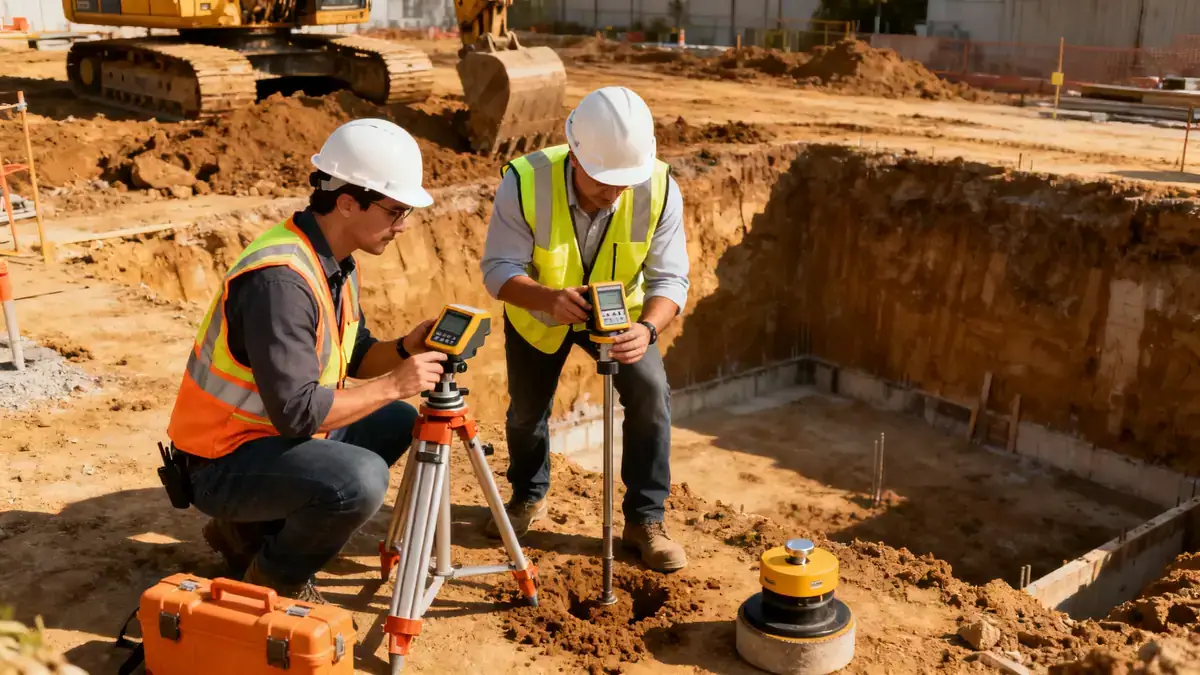
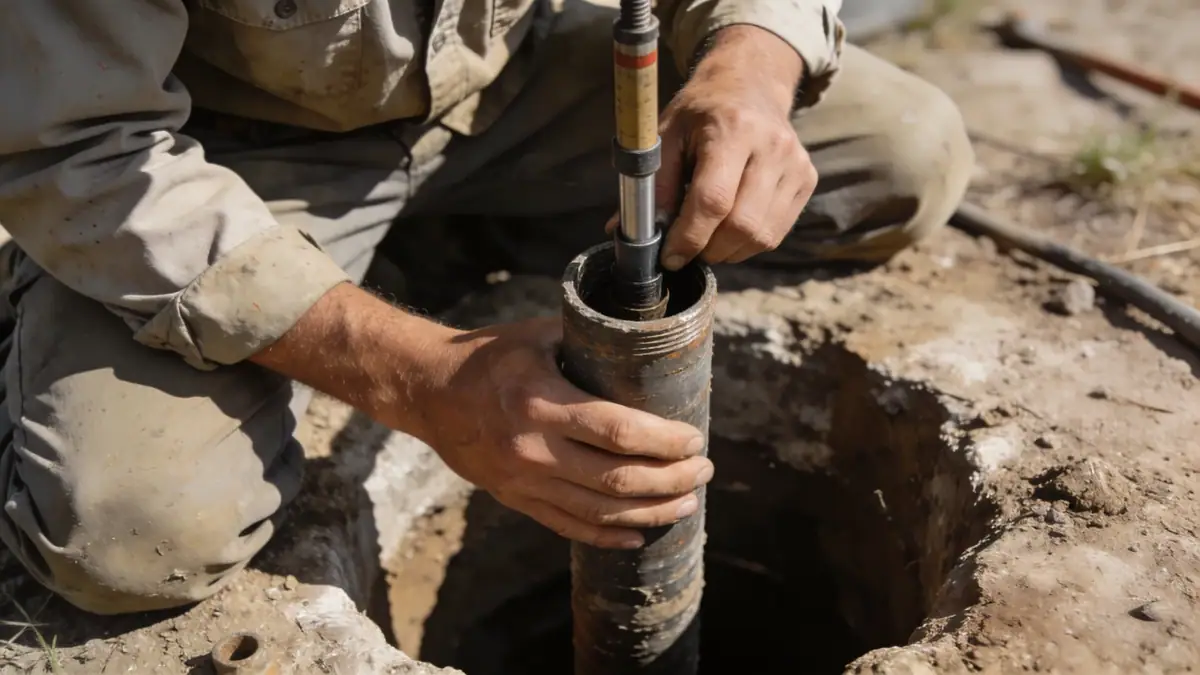
Our approach in Milwaukee begins with a comprehensive review of existing geologic maps and prior subsurface data. We then perform spt boring to obtain disturbed and undisturbed samples at 1.5 m intervals, following ASTM D1586. Standard penetration tests are conducted with a safety hammer, recording N-values every 1.5 m. Laboratory testing includes grain size distribution (ASTM D6913), Atterberg limits (ASTM D4318), and unconfined compression (ASTM D2166). This data informs bearing capacity, settlement, and lateral earth pressure estimates.
Reference Technical Parameters
| Parameter | Reference Value |
|---|---|
| Predominant soil type | Glacial till (silty clay to sandy clay) |
| Maximum seismic acceleration (PGA) | 0.15g (ASCE 7-16) |
| Typical groundwater level | 3–6 m below grade |
| Bedrock depth | 15–30 m (Niagara Escarpment dolomite) |
| Typical N60 range | 10–40 blows/0.3 m |
Local Considerations — Milwaukee
Milwaukee's glaciated terrain presents variable soil conditions. In the downtown area, fill and soft lacustrine clays overlie dense till, requiring careful settlement analysis. The Menomonee River Valley and Kinnickinnic River corridor feature alluvial deposits with high groundwater, often demanding dewatering or deep foundations. On the East Side and North Shore, shallow bedrock near the lakefront can lead to excavation challenges. Our team adapts exploration programs—using heavier SPT hammers or CPT where needed—to capture this heterogeneity. For projects requiring specialized analysis, we collaborate with our soil mechanics laboratory to refine parameters for slope stability and retaining wall design.
Request a Quote
Our team reviews your project and issues an initial report at no cost.
Or write us directly at [email protected]
Services in Milwaukee
Applicable Standards
- ASTM D1586
- ASCE 7-16
- IBC 2021
- Wisconsin Administrative Code Comm 5
Frequently Asked Questions
What soil types are typical for Milwaukee construction projects?
Milwaukee's soils are primarily glacial till—a dense mixture of silty clay, sand, and gravel—overlying Niagaran dolomite bedrock. In valley areas, soft lacustrine clays and alluvial deposits are common, requiring careful foundation design to mitigate differential settlement.
Does Milwaukee have seismic design requirements?
Yes, Milwaukee is in Seismic Design Category B per ASCE 7-16, with a mapped maximum considered earthquake (MCE) spectral response acceleration at 0.2 s of 0.15g. Although not high seismicity, site-specific soil response must be evaluated for structures in Risk Category II and above.
Are geotechnical investigations mandatory for new buildings in Milwaukee?
While not explicitly required by city code for all projects, the Wisconsin Administrative Code (Comm 5) and most lenders/design professionals mandate a subsurface investigation to establish allowable bearing capacity and groundwater conditions. Our firm provides these studies for permit submission.