
Methodology
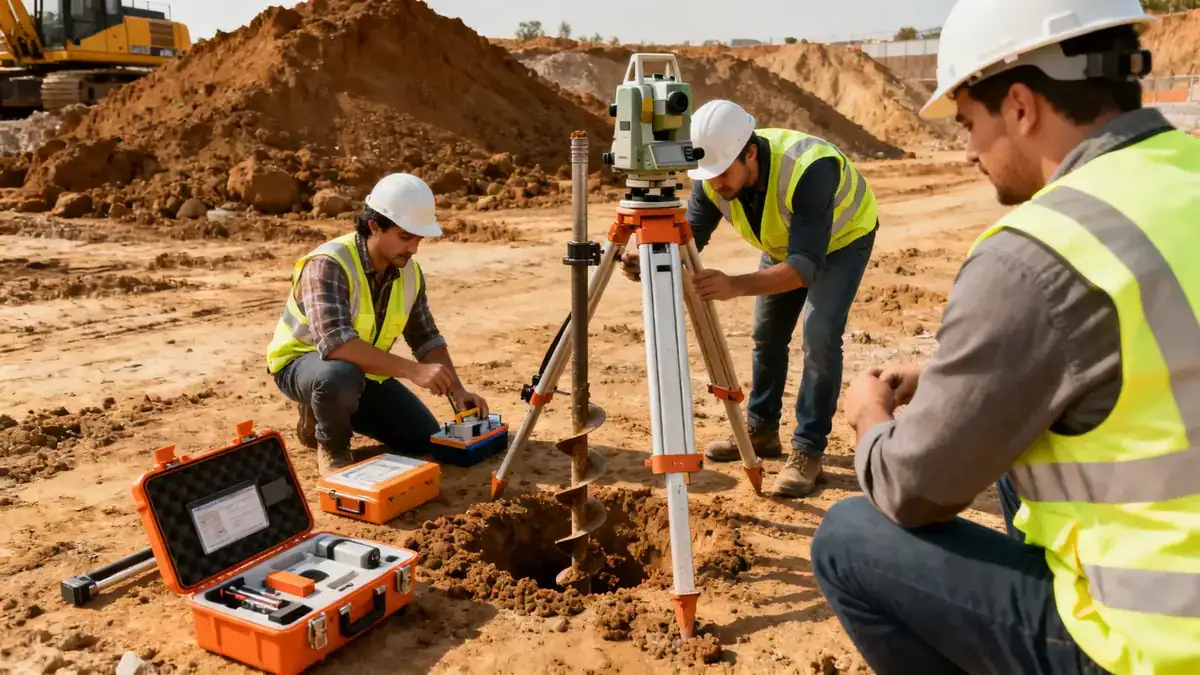
Our methodology in Manchester New Hampshire integrates standard penetration testing (SPT) per ASTM D1586 with laboratory classification and in-situ geophysical surveys. We evaluate bearing capacity, settlement, and liquefaction potential using site-specific soil profiles. For deep foundations, we correlate N60 values with end-bearing and skin friction parameters. Our team also employs spt boring to obtain continuous soil samples and groundwater observations, ensuring design parameters reflect actual subsurface conditions. All fieldwork follows strict quality control protocols, and our reports include detailed logs, laboratory results, and engineering analyses tailored to Manchester's glacial geology.
Reference Technical Parameters
| Parameter | Reference Value |
|---|---|
| Predominant soil type | Glacial till and alluvial sands/gravels |
| Maximum seismic acceleration (PGA) | 0.15 g (ASCE 7-16 Site Class C) |
| Typical groundwater level | 3–8 ft below grade (varies seasonally) |
| Bedrock depth | 10–40 ft (granite/schist) |
| Typical N60 range | 8–35 blows/ft (sands); 4–15 blows/ft (silts/clays) |
Local Considerations — Manchester New Hampshire
Manchester's subsurface is dominated by glacial till and stratified drift from the Wisconsin glaciation. The Merrimack River floodplain contains soft alluvial deposits with high groundwater, requiring dewatering and deep foundations for structures. Seismic design follows ASCE 7-16 with a mapped PGA of 0.15 g, but site-specific amplification may occur in soft soils. Our team has extensive experience with urban infill projects where buried utilities and undocumented fill complicate investigations. We also serve surrounding communities like Bedford, Hooksett, and Londonderry. For broader regional context, see our geotechnical engineering services in New York.
Request a Quote
Our team reviews your project and issues an initial report at no cost.
Or write us directly at [email protected]
Services in Manchester New Hampshire
Applicable Standards
- ASTM D1586 – Standard Penetration Test (SPT)
- ASCE 7-16 – Minimum Design Loads (Seismic)
- NEC (New England Building Code) – Site Characterization
- OSHA 29 CFR 1926 – Excavation Safety
Frequently Asked Questions
What soil types are most common in Manchester, New Hampshire?
Manchester's soils are predominantly glacial till (sandy/silty with cobbles) and alluvial deposits along the Merrimack River. Silty sands and gravels are typical, with occasional clay lenses. Bedrock is generally granite or schist at moderate depths.
Does Manchester have specific seismic design requirements?
Yes, Manchester is in Seismic Design Category B per ASCE 7-16, with a mapped maximum PGA of 0.15 g. Site-specific response analysis may be required for soft soil profiles or critical facilities. Our team incorporates these factors into foundation design.
Are geotechnical studies mandatory for construction in Manchester?
While not always legally required for single-family homes, most commercial and multi-family projects require a geotechnical report per the New England Building Code. Lenders and insurers often mandate subsurface investigations for risk management.