Methodology

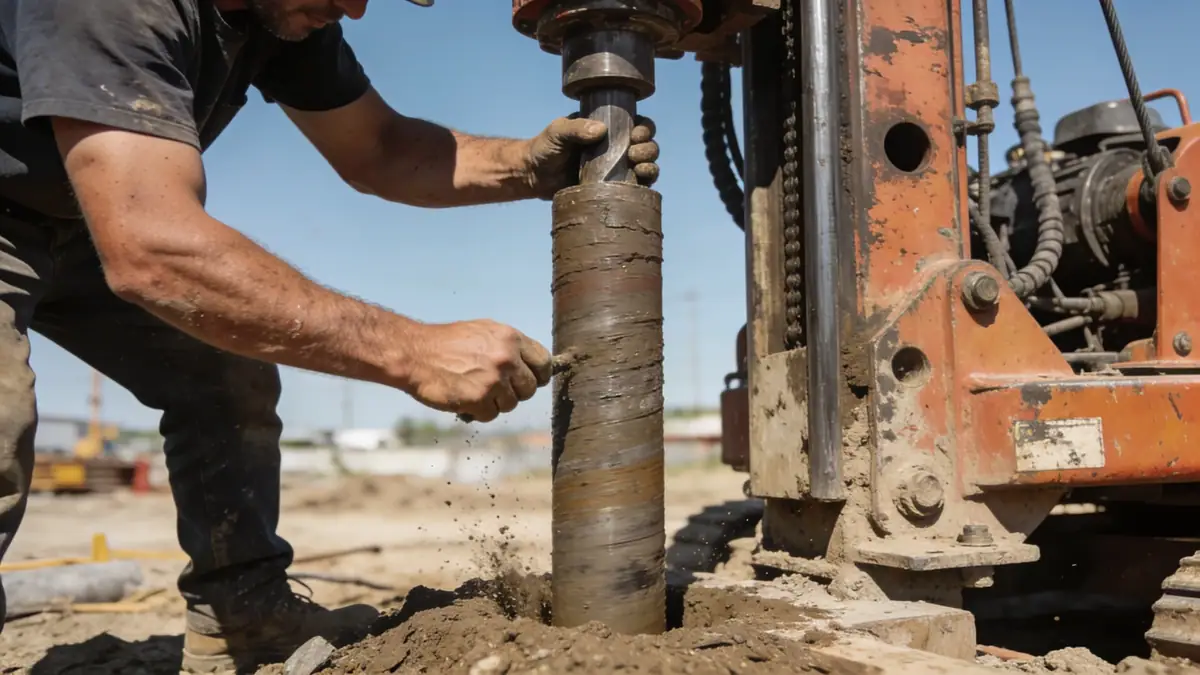
Our approach to geotechnical engineering in Hartford Connecticut begins with a thorough review of existing geologic maps and records. We then conduct field investigations using spt boring to sample soils and measure standard penetration resistance (N-value) per ASTM D1586. In the laboratory, we perform index tests, strength tests, and consolidation tests to quantify soil behavior. For slope stability and retaining wall designs, we use limit equilibrium and finite element methods. All analyses are calibrated to local conditions, accounting for the region's glacial history and seismic hazard. Our methodology ensures that every recommendation is site-specific and defensible.
Reference Technical Parameters
| Parameter | Reference Value |
|---|---|
| Predominant soil type | Glacial till and alluvial deposits |
| Maximum seismic acceleration (PGA) | 0.2g (ASCE 7-16) |
| Typical groundwater level | 3 to 6 m below grade |
| Bedrock depth | 15 to 30 m (sandstone/shale) |
| Typical N60 range | 10 to 40 blows/0.3 m |
Local Considerations — Hartford Connecticut
Hartford's geology is shaped by glacial processes, with stratified drift and till overlying sedimentary bedrock. The Connecticut River valley features thick alluvial deposits with high groundwater, requiring careful dewatering and foundation design. Seismic hazard is moderate, with peak ground acceleration of 0.2g per ASCE 7. Urban infill projects often encounter undocumented fill, necessitating deeper investigations. For regional expertise, refer to our geotechnical engineering services in New York, where similar glacial conditions prevail. Our team also provides soil mechanics laboratory testing tailored to Hartford's soil types.
Request a Quote
Our team reviews your project and issues an initial report at no cost.
Or write us directly at [email protected]
Services in Hartford Connecticut
Applicable Standards
- ASTM D1586 (Standard Penetration Test)
- ASCE 7-16 (Minimum Design Loads for Buildings)
- Connecticut State Building Code (CSBC)
- IBC 2018 (International Building Code)
Frequently Asked Questions
What types of soil are commonly found in Hartford Connecticut?
Hartford's soils are predominantly glacial till (silty sand with gravel) and alluvial deposits (fine sand, silt, and clay) along the Connecticut River. These layers vary in thickness and density, requiring site-specific exploration.
Is seismic analysis required for projects in Hartford?
Yes, per ASCE 7-16, Hartford lies in Seismic Design Category B. Peak ground acceleration is 0.2g, so seismic site classification and liquefaction assessment are recommended for critical structures.
Are geotechnical studies mandatory for building permits in Hartford?
The Connecticut State Building Code requires a geotechnical investigation for most new buildings and major additions. The study must characterize subsurface conditions and provide foundation recommendations.