
Methodology
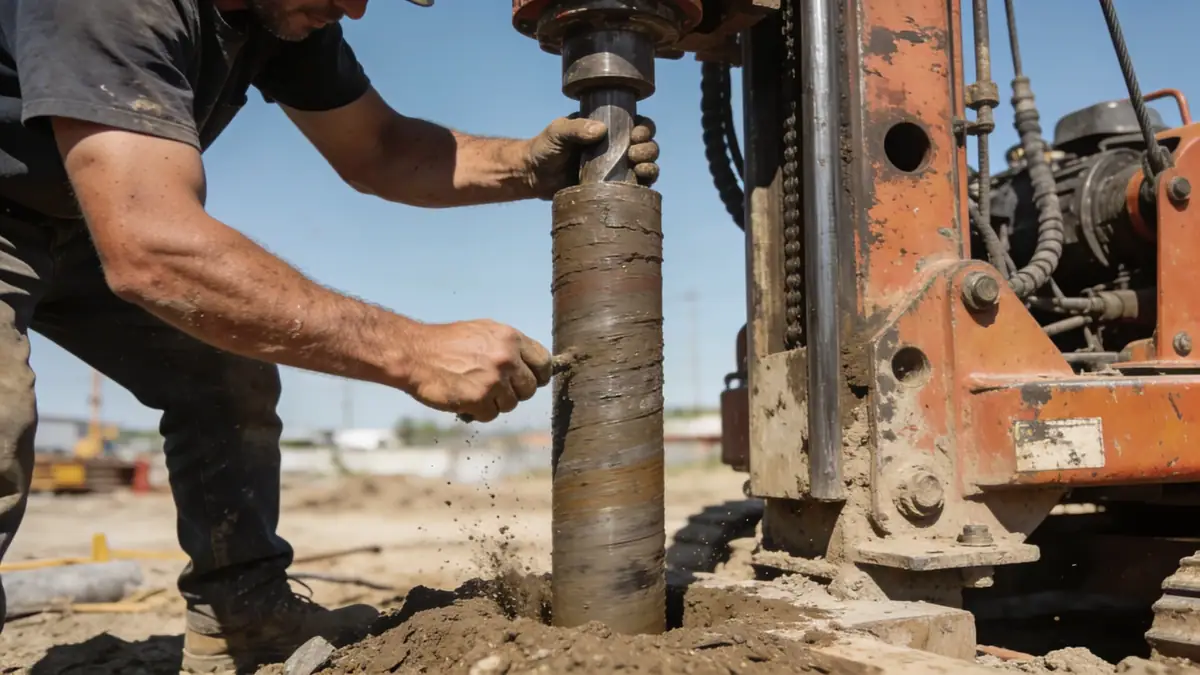
Our methodology for geotechnical engineering in Fort Worth begins with a detailed review of existing geological maps and historical data. We then perform field investigations, including spt boring at strategic locations to obtain soil samples and measure resistance. Laboratory testing follows, with classification tests (ASTM D6913, D7928) and strength tests (D3080) to characterize soil behavior. We integrate these results with site-specific groundwater monitoring and seismic hazard analysis per ASCE 7. Our final reports provide foundation recommendations, settlement estimates, and construction considerations, all tailored to Fort Worth's unique subsurface conditions.
Reference Technical Parameters
| Parameter | Reference Value |
|---|---|
| Predominant soil type | Clay and shale (Eagle Ford Formation) |
| Typical groundwater depth | 10–30 ft |
| Maximum seismic acceleration (PGA) | 0.10–0.15 g (ASCE 7) |
| Bedrock depth | 10–50 ft |
| Typical N60 range (SPT) | 15–40 blows/ft |
Local Considerations — Fort Worth
Fort Worth's geology is dominated by clay-rich soils derived from the Eagle Ford Shale and Austin Chalk, which exhibit moderate to high plasticity and significant shrink-swell potential. Groundwater is typically encountered within 10–30 ft, with perched zones common in the western areas near the Trinity River. Seismic design per ASCE 7 requires consideration of Site Class D for most locations. For expansive clays, our soil mechanics laboratory provides Atterberg limits and consolidation tests to estimate heave potential. Our geotechnical engineering en Houston team also offers regional expertise for similar Gulf Coast conditions.
Request a Quote
Our team reviews your project and issues an initial report at no cost.
Or write us directly at [email protected]
Services in Fort Worth
Applicable Standards
- ASCE 7 (Minimum Design Loads and Associated Criteria)
- IBC (International Building Code)
- ASTM D1586 (Standard Test Method for SPT)
- ASTM D3080 (Direct Shear Test)
- ASTM D698 (Standard Proctor)
Frequently Asked Questions
What are the predominant soil types in Fort Worth?
Fort Worth's soils are primarily clay and shale from the Eagle Ford Formation, with some areas underlain by Austin Chalk. These soils often have high plasticity and can be expansive, requiring careful foundation design to mitigate movement.
Is seismic analysis required for geotechnical studies in Fort Worth?
Yes, ASCE 7 maps indicate a peak ground acceleration of 0.10–0.15 g for Fort Worth. For most structures, Seismic Design Category B or C applies, and site-specific response analysis may be needed for critical facilities.
Are geotechnical studies mandatory for construction in Fort Worth?
While not always legally required, most local building officials recommend or require geotechnical reports for new buildings, especially those with deep foundations or in areas with known expansive soils. Lenders and insurers often mandate them.