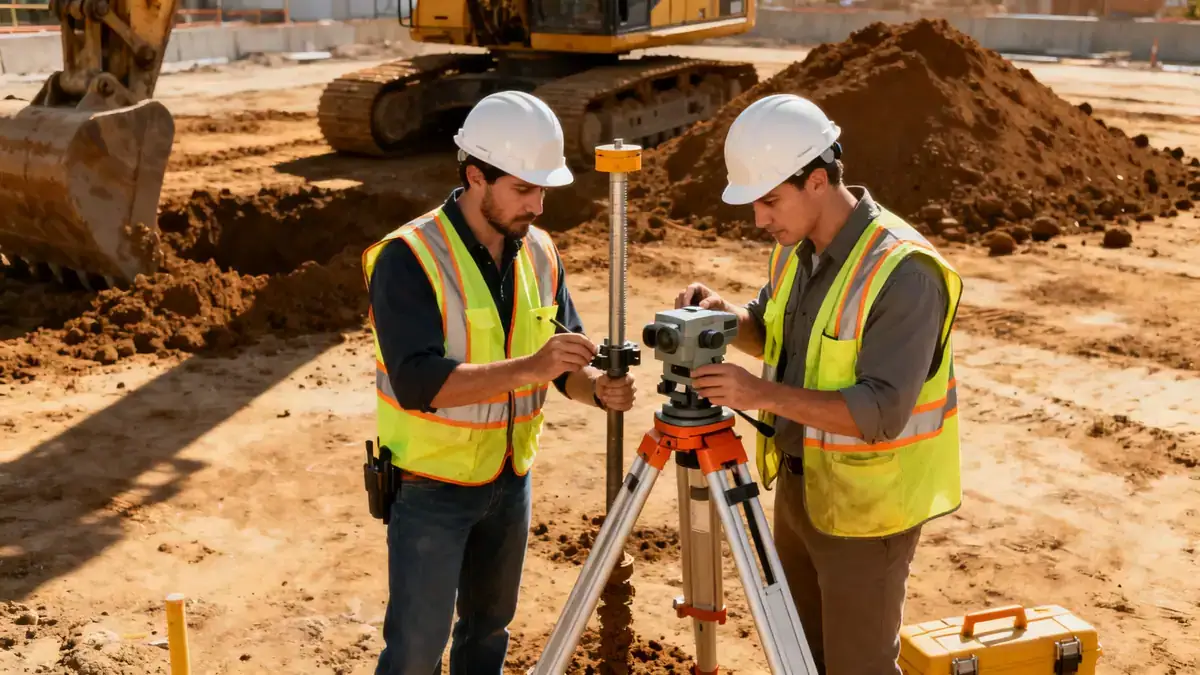
Methodology
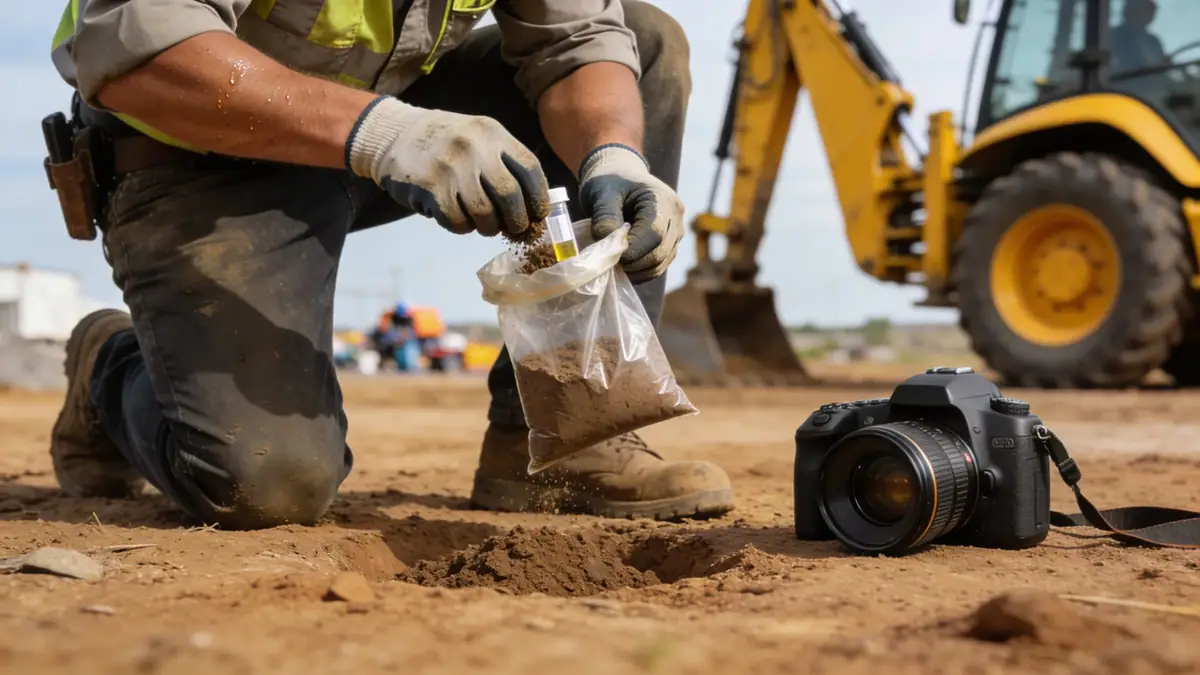
Our methodology in Fort Wayne follows a systematic approach tailored to the region's glacial deposits. We begin with a comprehensive site reconnaissance and review of existing geological maps, followed by a subsurface exploration program that typically includes spt boring at intervals of 1.5 m to 3 m, advanced soil mechanics laboratory testing, and in-situ groundwater monitoring. Standard penetration tests (N60) are conducted per ASTM D1586, with samples retrieved for classification and strength testing. All data are synthesized into a geotechnical report that addresses bearing capacity, settlement, liquefaction potential, and lateral earth pressures, providing clear parameters for foundation and earthwork design.
Reference Technical Parameters
| Parameter | Reference Value |
|---|---|
| Predominant Soil Type | Glacial till (sandy silt to silty clay with gravel) |
| Maximum Seismic Acceleration (PGA) | 0.10–0.15 g (ASCE 7 Site Class C/D) |
| Typical Groundwater Level | 3–6 m below grade (varies seasonally) |
| Bedrock Depth | 30–60 m (Devonian limestone and shale) |
| Typical N60 Range | 10–30 blows/0.3 m (till); 5–15 blows/0.3 m (outwash sands) |
Local Considerations — Fort Wayne
Fort Wayne sits atop the Wabash Valley seismic zone, with a maximum considered earthquake (MCE) spectral acceleration of 0.15–0.20 g per ASCE 7. The city's glacial geology results in highly variable soil conditions: dense till dominates the north and west, while outwash sands and lacustrine clays are prevalent along the St. Joseph and Maumee Rivers. Groundwater can be encountered as shallow as 2 m in low-lying areas, requiring careful dewatering and waterproofing. Our team is well-versed in local code requirements and has completed numerous projects ranging from residential subdivisions to industrial facilities. We also provide services beyond Fort Wayne, leveraging geotechnical engineering en Chicago as our primary hub for regional expertise.
Request a Quote
Our team reviews your project and issues an initial report at no cost.
Or write us directly at [email protected]
Services in Fort Wayne
Applicable Standards
- ASTM D1586 (Standard Penetration Test)
- ASCE 7 (Minimum Design Loads for Buildings and Other Structures)
- Indiana Building Code (IBC based)
- ASTM D2487 (Unified Soil Classification System)
- ASTM D422 (Grain-Size Analysis)
Frequently Asked Questions
What soil types are typically found in Fort Wayne, Indiana?
The predominant soil in Fort Wayne is glacial till, a heterogeneous mixture of clay, silt, sand, and gravel deposited by glaciers. Outwash sands and lacustrine clays are also common near rivers. These soils can vary significantly over short distances, necessitating thorough subsurface exploration for reliable foundation design.
Is seismic design required for structures in Fort Wayne?
Yes, per the Indiana Building Code and ASCE 7, Fort Wayne falls within Seismic Design Category B to C due to its proximity to the Wabash Valley seismic zone. Peak ground accelerations of 0.10–0.15 g are considered, and liquefaction potential must be evaluated for sites with loose, saturated sands.
Are geotechnical investigations mandatory for all construction in Fort Wayne?
While not explicitly required for every small residential project, most commercial and multi-family developments must submit a geotechnical report for building permit approval. Even for single-family homes, a geotechnical evaluation is strongly recommended to avoid costly foundation repairs from differential settlement or groundwater issues.