
Methodology
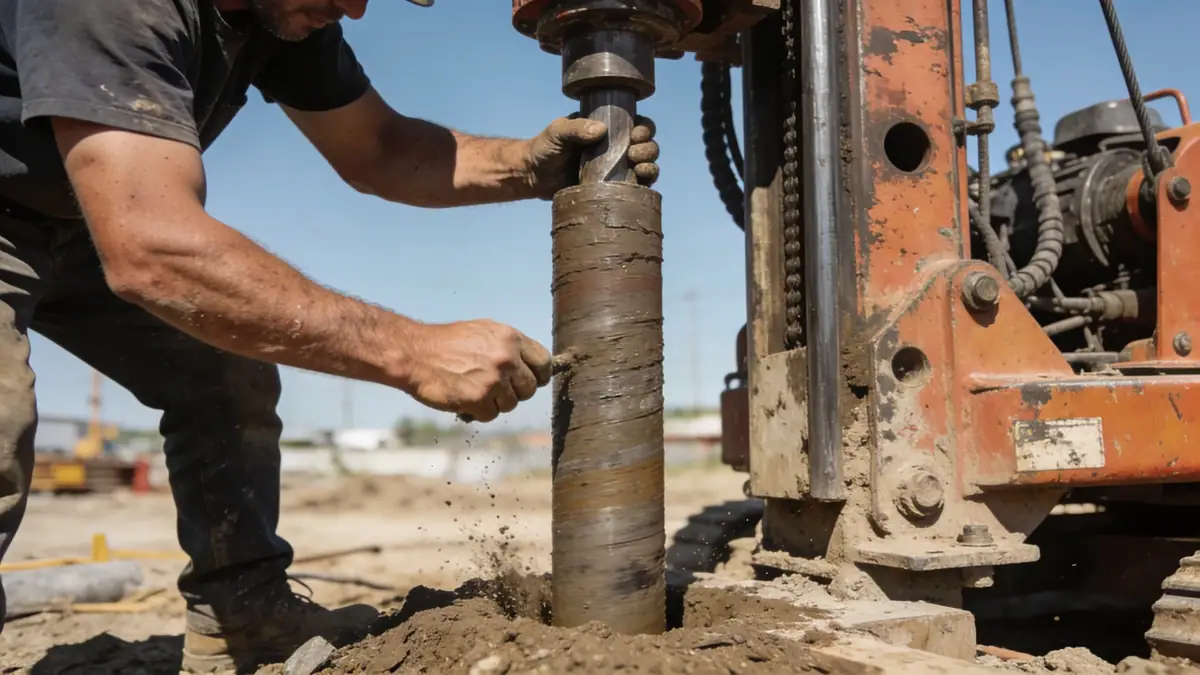
Our methodology for geotechnical engineering in Fayetteville Arkansas begins with a thorough review of site history and existing geological data. We then execute a field investigation program tailored to project requirements, typically including spt boring to obtain soil samples and measure penetration resistance. Laboratory tests on retrieved samples follow ASTM D1586 and other relevant standards to classify soils, determine strength parameters, and assess compressibility. Our team integrates these findings with local seismic hazard data to evaluate liquefaction potential and design appropriate foundation systems. All work is documented in detailed reports that provide clear recommendations for construction. This systematic approach ensures that our clients receive reliable information for decision-making and regulatory compliance.
Reference Technical Parameters
| Parameter | Reference Value |
|---|---|
| Predominant soil type | Silty clay and clayey silt with sand lenses |
| Maximum seismic acceleration (PGA) | 0.2g (ASCE 7-16, Site Class C) |
| Typical groundwater level | 10-25 feet below ground surface |
| Bedrock depth | 50-150 feet (shallow in northern areas) |
| Typical N60 range | 4-15 blows per foot (clay), 10-30 (sand) |
Local Considerations — Fayetteville Arkansas
Fayetteville Arkansas is situated in the Ozark Plateau, underlain by Mississippian limestone and chert. Soils are predominantly residual silty clays derived from weathered bedrock, with colluvial deposits on slopes and alluvial soils along streams. Groundwater is generally encountered at depths of 10-25 feet, but can be shallower near drainage ways. Seismic hazard is moderate, with a peak ground acceleration of 0.2g per ASCE 7, requiring attention to site amplification and liquefaction in loose saturated sands. Local regulations mandate geotechnical reports for most commercial structures. Our team has extensive experience with these conditions, having supported numerous projects in Fayetteville Arkansas. For regional coordination, our geotechnical engineering services from Houston provide additional resources and expertise.
Request a Quote
Our team reviews your project and issues an initial report at no cost.
Or write us directly at [email protected]
Services in Fayetteville Arkansas
Applicable Standards
- ASTM D1586 (Standard Penetration Test)
- ASCE 7-16 (Minimum Design Loads and Associated Criteria for Buildings)
- IBC 2018 (International Building Code)
- AASHTO (for transportation projects)
- Local municipal codes for Fayetteville Arkansas
Frequently Asked Questions
What types of soil are commonly found in Fayetteville Arkansas?
The predominant soils in Fayetteville Arkansas are silty clays and clayey silts, often containing sand lenses. These residual soils originate from weathered limestone and chert bedrock. Colluvial deposits occur on slopes, and alluvial soils are present near streams.
Is a geotechnical study required for building permits in Fayetteville?
Yes, most commercial and multi-family residential projects in Fayetteville Arkansas require a geotechnical investigation as part of the building permit process. Single-family homes may be exempt, but site-specific recommendations are strongly advised to ensure foundation safety.
How does seismic activity affect foundation design in Fayetteville?
Fayetteville Arkansas is in a moderate seismic zone with a PGA of 0.2g. Foundation design must account for potential liquefaction in loose saturated sands and site amplification. Our team evaluates these factors per ASCE 7 to recommend appropriate foundation types and ground improvement measures.