Methodology

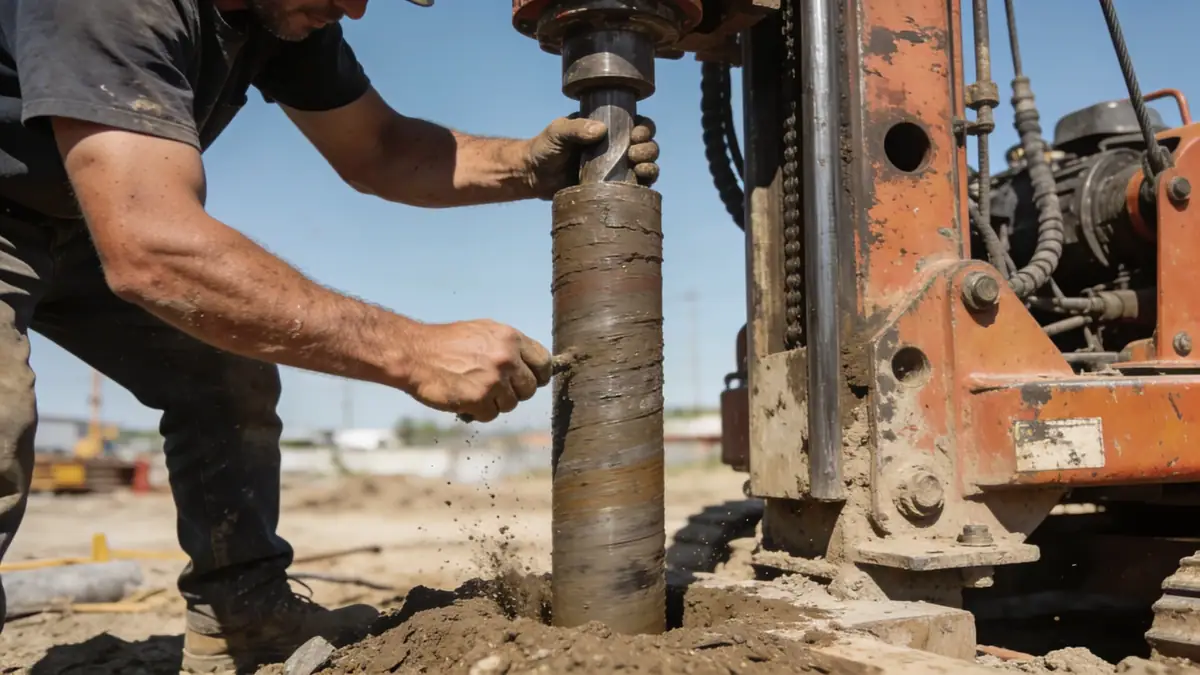
Our methodology for geotechnical engineering in Durham begins with a thorough review of existing geological maps and historical data. We then conduct field investigations, including spt boring to characterize subsurface conditions. Laboratory testing on recovered samples follows ASTM standards, such as ASTM D1586 for standard penetration tests. Our approach integrates site-specific seismic hazard analysis per ASCE 7, considering the local PGA values. We develop detailed geotechnical reports with recommendations for foundations, earthworks, and drainage, ensuring compliance with North Carolina building codes and local regulations.
Reference Technical Parameters
| Parameter | Reference Value |
|---|---|
| Predominant soil type | Residual sandy silts and clays (Piedmont saprolite) |
| Maximum seismic acceleration (PGA) | 0.2g to 0.3g (per ASCE 7, Site Class C) |
| Typical groundwater level | 5 to 15 feet below ground surface |
| Bedrock depth | 10 to 40 feet (gneiss/schist) |
| Typical N60 range | 10 to 30 blows/ft (in residual soils) |
Local Considerations — Durham
Durham's geology is dominated by Piedmont residual soils overlying metamorphic bedrock. These soils are highly variable, with clay content increasing with depth. Shallow groundwater is common in low-lying areas near the Eno River, requiring dewatering for deep excavations. Seismic design must account for moderate PGA values, with site amplification due to soil stiffness contrasts. Our team has addressed challenges such as expansive clays in western Durham and shallow rock near downtown. For complex slope stability issues, we refer to our slope stability expertise. As a regional hub, we coordinate with our geotechnical engineering en Philadelphia office for multi-state projects.
Request a Quote
Our team reviews your project and issues an initial report at no cost.
Or write us directly at [email protected]
Services in Durham
Applicable Standards
- ASTM D1586
- ASCE 7
- North Carolina Building Code (NCBC)
- IBC 2021
Frequently Asked Questions
What soil types are commonly found in Durham?
Durham's Piedmont region features residual soils from weathered metamorphic rocks, primarily sandy silts and clays (saprolite). These soils often contain mica and are prone to erosion. Depth to bedrock varies, typically 10-40 feet, with gneiss and schist underlying.
Do I need a geotechnical study for a residential project in Durham?
Yes, the North Carolina Building Code requires a geotechnical investigation for most residential construction, especially for slab-on-grade foundations or if expansive soils are suspected. A site-specific study ensures proper foundation design and mitigates risks of differential settlement.
What seismic design considerations apply in Durham?
Durham falls under Seismic Design Category B per ASCE 7, with a PGA of 0.2-0.3g. Site class (typically C or D) influences spectral accelerations. Engineers must account for soil amplification, especially in areas with deeper soft soils. Compliance with the NCBC is mandatory.