
Methodology
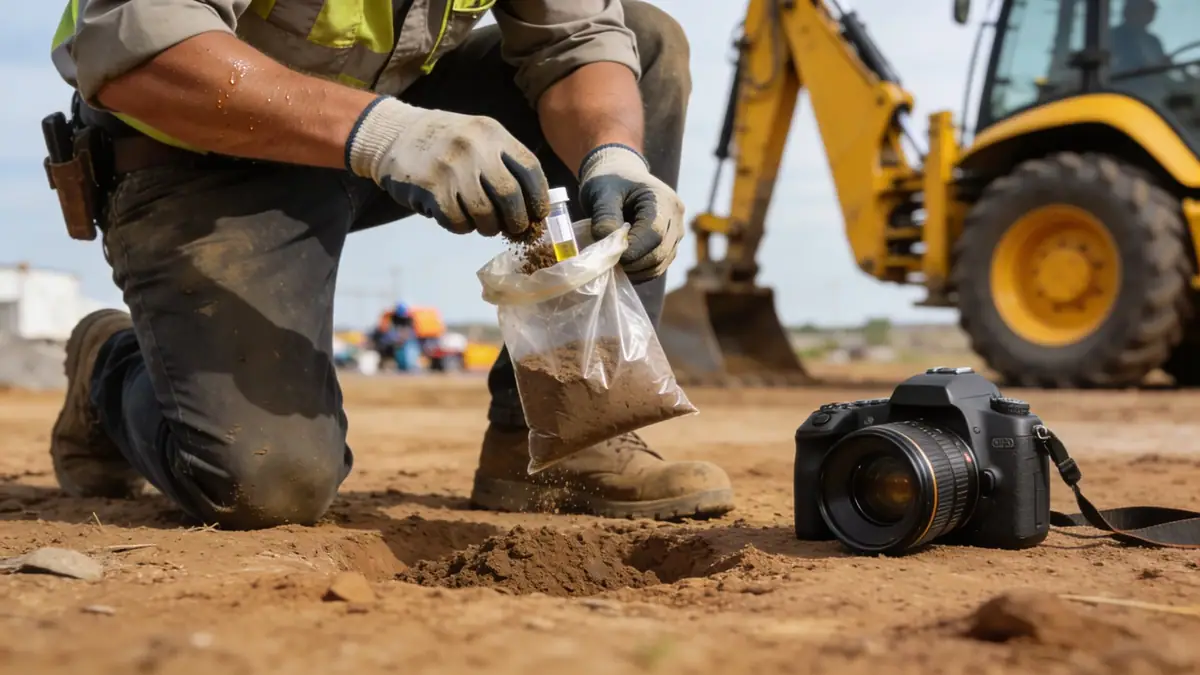
Our methodology for projects in Des Moines begins with a thorough review of existing geologic maps and previous boring logs. We then conduct site-specific subsurface explorations using standard penetration testing (SPT) per ASTM D1586, with sampling intervals typically every 1.5 meters. Soil samples are classified in our laboratory according to the Unified Soil Classification System (USCS). Groundwater levels are monitored during drilling and with standpipe piezometers. For sites underlain by loess or alluvial deposits, we perform additional laboratory testing including Atterberg limits and consolidation tests. Our approach integrates field data with analytical models to characterize settlement potential, bearing capacity, and seismic site class. We provide our spt boring services to gather reliable data for foundation design.
Reference Technical Parameters
| Parameter | Reference Value |
|---|---|
| Predominant soil type | Glacial till (silty clay with sand and gravel) |
| Maximum seismic acceleration (PGA) | 0.15g (ASCE 7-16) |
| Typical groundwater level | 3–6 m below ground surface |
| Bedrock depth | 30–50 m (shale/limestone) |
| Typical N60 range (SPT) | 10–30 blows/0.3 m |
Local Considerations — Des Moines
Des Moines lies within the Des Moines Lobe, a region of glacial till overlain by loess in upland areas. Expansive clay soils in the till can cause foundation movement if not properly mitigated. Groundwater is typically encountered at depths of 3–6 m, requiring dewatering for deep excavations. The city is in Seismic Design Category B (ASCE 7-16), with a maximum considered earthquake spectral response acceleration of 0.15g. Older neighborhoods in the downtown core may have undocumented fill or urban debris. New developments in western suburbs like West Des Moines often encounter alluvial soils along the Raccoon River. Our soil mechanics laboratory provides essential index and strength testing for these local conditions. For projects requiring specialized expertise, our team coordinates with our geotechnical engineering in Chicago office to leverage broader experience.
Request a Quote
Our team reviews your project and issues an initial report at no cost.
Or write us directly at [email protected]
Services in Des Moines
Applicable Standards
- ASTM D1586 (Standard Penetration Test)
- ASCE 7-16 (Minimum Design Loads for Buildings)
- IBC 2021 (International Building Code)
- Iowa Statewide Urban Design and Specifications (SUDAS)
Frequently Asked Questions
What soil types are commonly found in Des Moines?
The predominant soil is glacial till, consisting of silty clay with varying amounts of sand and gravel. Loess deposits are common on upland areas, while alluvial soils occur along the Des Moines and Raccoon Rivers. Expansive clays are present in some areas and require geotechnical evaluation.
Does Des Moines have seismic design requirements?
Yes, Des Moines is in Seismic Design Category B per ASCE 7-16. The maximum considered earthquake spectral response acceleration (SDS) is approximately 0.15g. Although moderate, seismic site classification and liquefaction potential should be assessed for critical structures.
Are geotechnical studies mandatory for construction in Des Moines?
While not always legally required for single-family homes, most commercial and multi-family projects require a geotechnical report to obtain building permits. The City of Des Moines and many suburbs reference IBC 2021, which mandates subsurface investigations for structures with certain risk categories.