Methodology

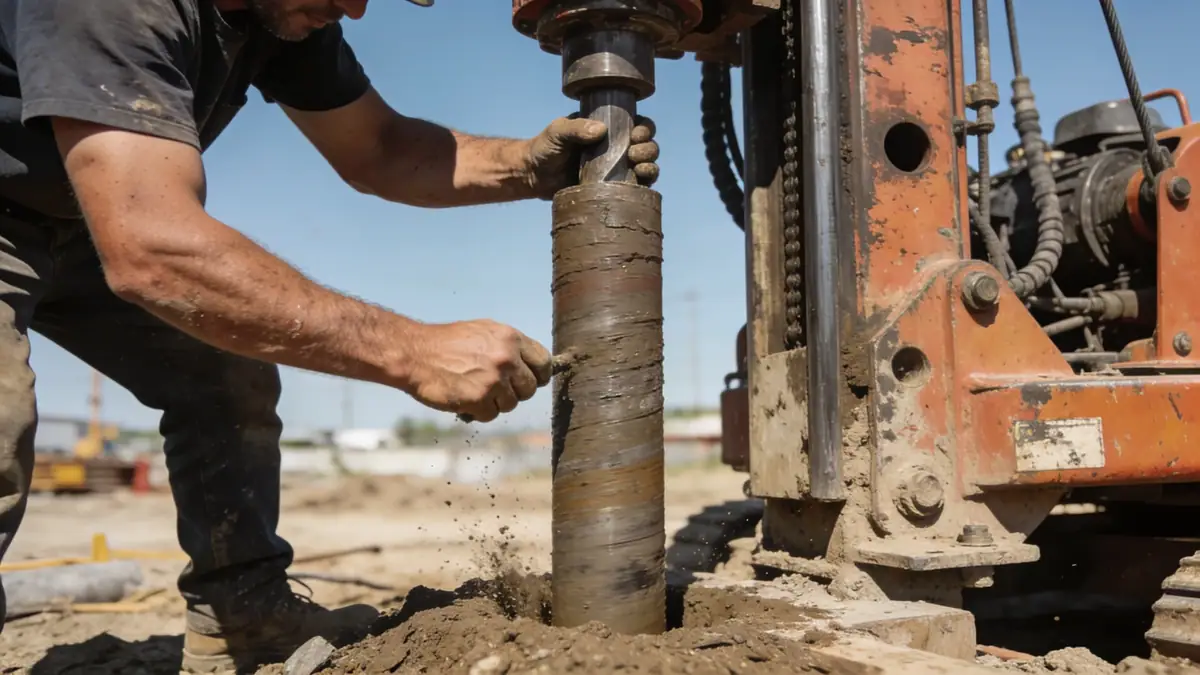
Our approach in Corpus Christi integrates standard penetration testing (SPT) per ASTM D1586 with continuous sampling to characterize subsurface stratigraphy. We combine this with laboratory analysis of soil index properties, including Atterberg limits and grain size distribution, to classify materials and predict behavior under load. For detailed soil profiling, we employ spt boring at intervals of 1.5 m to capture variations in the alluvial and coastal deposits typical of the region.
Reference Technical Parameters
| Parameter | Reference Value |
|---|---|
| Predominant soil type | Expansive clay and silty sand |
| Maximum seismic acceleration (PGA) | 0.15g (ASCE 7-16) |
| Typical groundwater level | 1.5–3.0 m below ground surface |
| Bedrock depth | >30 m (deep sedimentary basin) |
| Typical N60 range | 5–25 blows/0.3 m |
Local Considerations — Corpus Christi
Corpus Christi lies on the Gulf Coastal Plain underlain by Quaternary alluvial and fluvial deposits. The dominant soil types are high-plasticity clays (CH) and silty sands (SM), with significant shrink-swell potential. Groundwater is typically shallow, at depths of 1.5–3.0 m, requiring dewatering considerations for excavations. Seismic hazard is moderate, with a maximum considered earthquake spectral acceleration (SDS) of 0.15g per ASCE 7-16. Local building codes incorporate these parameters, demanding site-specific geotechnical evaluations. Our team, based in Houston, coordinates with Corpus Christi developers through our geotechnical engineering en Houston office to ensure seamless project delivery.
Request a Quote
Our team reviews your project and issues an initial report at no cost.
Or write us directly at [email protected]
Services in Corpus Christi
Applicable Standards
- ASTM D1586
- ASCE 7-16
- International Building Code (IBC) 2021
- City of Corpus Christi Building Code
Frequently Asked Questions
What soil conditions are typical in Corpus Christi?
Corpus Christi's soils are predominantly expansive clays and silty sands from the Gulf Coastal Plain. These materials have high plasticity and shrink-swell potential, requiring careful foundation design to mitigate movement.
What seismic provisions apply to Corpus Christi?
Per ASCE 7-16, Corpus Christi has a moderate seismic hazard with a spectral acceleration (SDS) of 0.15g. Site-specific response spectra are required for essential facilities, but standard IBC provisions apply for most structures.
Are geotechnical investigations mandatory for new construction in Corpus Christi?
Yes, the City of Corpus Christi Building Code requires a geotechnical report for most new structures, particularly those with expansive soils or shallow foundations. The report must address soil bearing capacity, settlement, and seismic site class per IBC.