Methodology
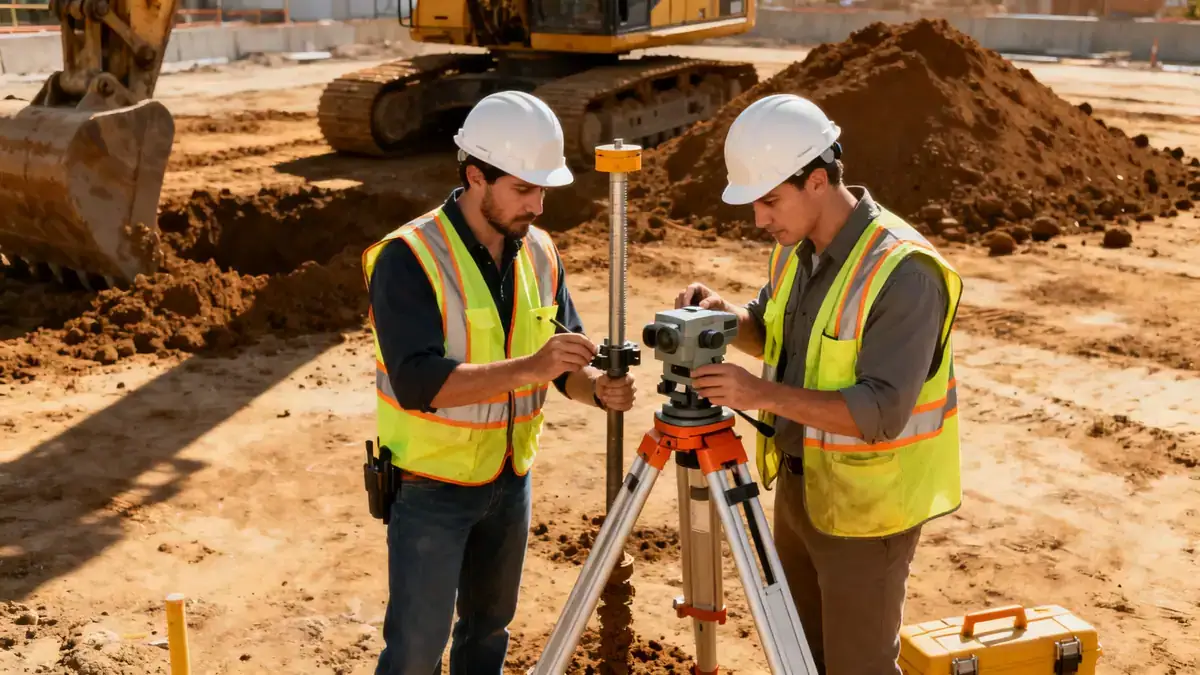
Our methodology for geotechnical engineering in Aurora begins with a comprehensive review of existing geological maps and borehole records. We then execute a targeted field investigation program, including spt boring at strategic locations to capture subsurface stratification. Laboratory testing on recovered samples follows ASTM standards to classify soils and determine engineering properties. This data informs our analysis of bearing capacity, settlement, and seismic site response. Our approach is tailored to Aurora's glacial geology, ensuring that recommendations address local challenges such as variable till density and shallow groundwater.
Reference Technical Parameters
| Parameter | Reference Value |
|---|---|
| Predominant soil type | Glacial till and lacustrine clay/silt |
| Typical N60 range (blows/ft) | 10–50 (variable with depth and location) |
| Average groundwater depth | 2–5 m below existing grade |
| Bedrock depth | Typically >30 m (shallow in western areas) |
| Seismic site class (ASCE 7) | Site Class D (stiff soil) predominant |
Local Considerations — Aurora
Aurora's subsurface is dominated by glacial till and lacustrine deposits from the Wisconsin glaciation, with varying thickness and density. Shallow groundwater (2–5 m) requires dewatering considerations for deep excavations. Seismic design per ASCE 7-22 assigns most areas to Site Class D, with peak ground acceleration (PGA) of 0.2–0.3g. Western Aurora, near the Fox River, may encounter alluvial sands and higher groundwater. Eastern areas have thicker clay layers prone to shrink-swell. Typical challenges include variable till layers requiring careful bearing capacity assessment. For broader context, our geotechnical engineering en Chicago hub provides regional insights.
Request a Quote
Our team reviews your project and issues an initial report at no cost.
Or write us directly at [email protected]
Services in Aurora
Applicable Standards
- ASTM D1586 (Standard Test Method for Penetration Test and Split-Barrel Sampling of Soils)
- ASTM D2487 (Standard Practice for Classification of Soils for Engineering Purposes)
- ASCE 7-22 (Minimum Design Loads and Associated Criteria for Buildings and Other Structures)
- IBC 2021 (International Building Code, adopted by Illinois)
Frequently Asked Questions
What are the typical soil types found in Aurora, Illinois?
Aurora's soils are predominantly glacial tills (silty clay with sand/gravel) and lacustrine deposits from glacial Lake Wauponsee. Alluvial sands and silts occur near the Fox River. These materials vary in density and consistency, requiring site-specific investigation.
What seismic design code applies to Aurora?
Aurora follows the Illinois adopted International Building Code (IBC 2021) with seismic provisions from ASCE 7-22. The region is assigned to Seismic Design Category B, with a mapped PGA of 0.2–0.3g and Site Class D dominating.
Are geotechnical studies mandatory for construction in Aurora?
While not explicitly required for all projects, Aurora's building department often requests geotechnical reports for commercial and multi-family buildings. IBC 2021 mandates site characterization for seismic design, making geotechnical engineering essential for compliance.